Yes, for most people an inflatable paddle board is worth it. A good one packs into a backpack, survives knocks that would ding a hard board, and feels close to rigid on the water. A hard board is still the better buy if you can store and transport one easily, or if you want to surf, race or cover long distances.
Quick answer
- Get an inflatable if: you have no garage or roof rack, you travel with your board, you paddle rocky rivers, or you’re buying for beginners and kids.
- Get a hard board if: you live near the water, have space to store a 10–12 foot board, and want the best glide, speed or wave performance.
- Avoid cheap no-name inflatables: thin single-layer PVC and glued seams are what give inflatables a bad name.
Why inflatables make sense for most paddlers

They go anywhere
Deflated, an inflatable rolls up to roughly the size of a sleeping bag and goes in the trunk, a closet or a checked bag. A hard board needs 10–12 feet of storage space and a roof rack. ISLE, which makes both, puts portability and storage at the top of the list for choosing an inflatable.
They’re usually lighter too. Glide’s weight guide puts most inflatables at around 17–28 lb and most hard boards at around 24–40 lb.
They’re tough
Drop an inflatable on a parking lot and it bounces. Drop an epoxy board and you may be fixing a ding. That’s why inflatables are the usual choice for rocky rivers and shallow lakes. They can still be punctured, but a patch kit fixes most small holes (see our patch kit picks).
They’re kinder when you fall
The deck is softer than a hard board’s, which helps when you fall on it, kneel for long spells or do yoga. For beginners, kids and dogs that’s a real plus.
Good ones are stiff
The core is drop-stitch fabric: thousands of threads join the top and bottom layers so the board inflates flat and firm instead of like a beach ball. Pumped to the maker’s recommended pressure (usually around 12–15 PSI), a well-built inflatable feels solid underfoot. Under-inflated, any inflatable feels bouncy and wobbly, which is where the “inflatables are unstable” reputation comes from.
Where inflatables fall short
Setup takes time
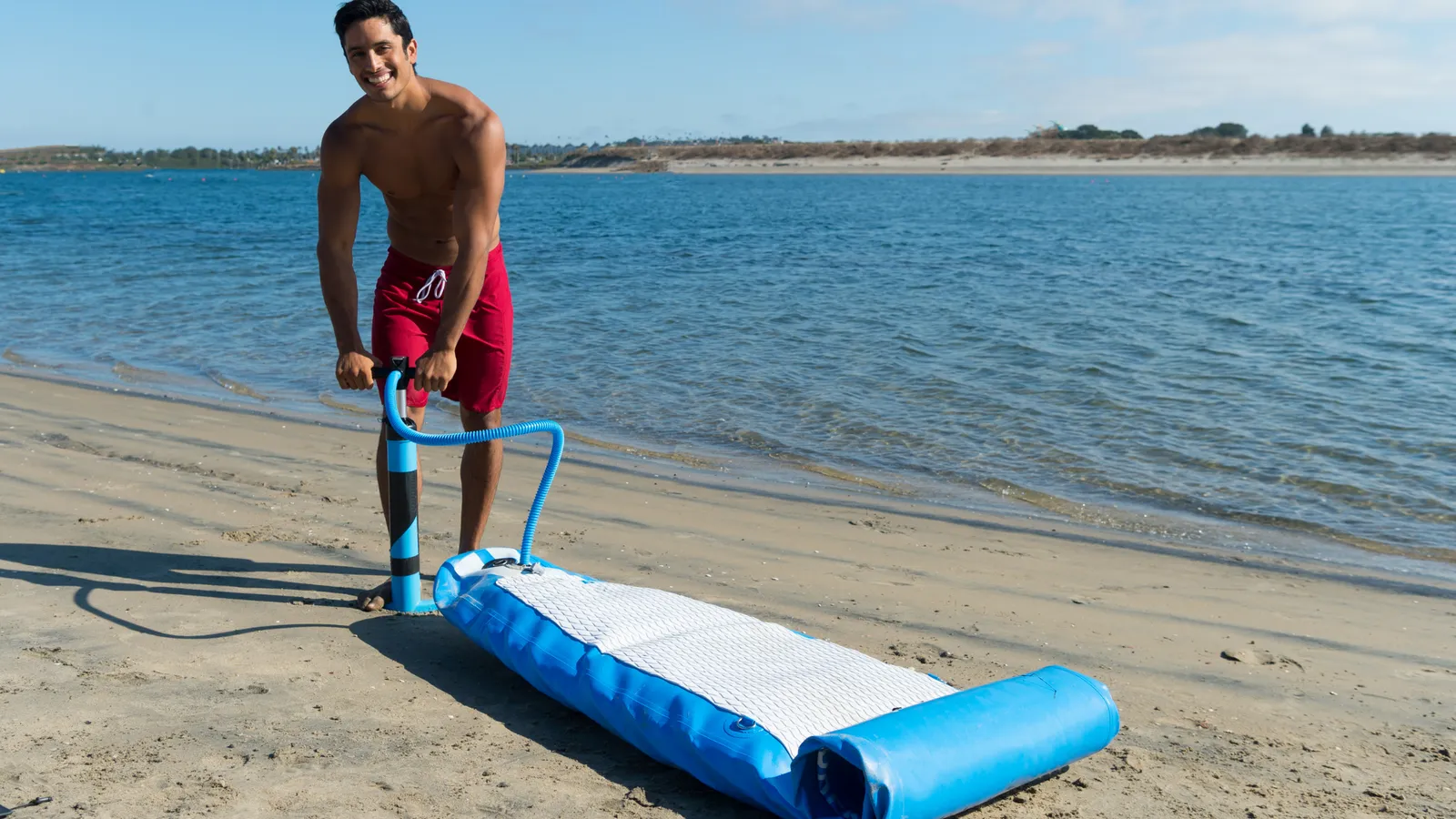
You have to pump it up before you paddle and roll it up afterwards. With a decent hand pump, plan on 5–10 minutes. An electric pump does the work for you; see our best SUP pumps roundup.
They’re a little slower
Hard boards glide further per stroke. When ISLE timed two paddlers on identical 12’6” inflatable and epoxy boards over a flat half-mile, the epoxy board was about 6% faster. That gap matters in a race. On a relaxed lake paddle you won’t notice it much.
They’re less precise in waves and wind
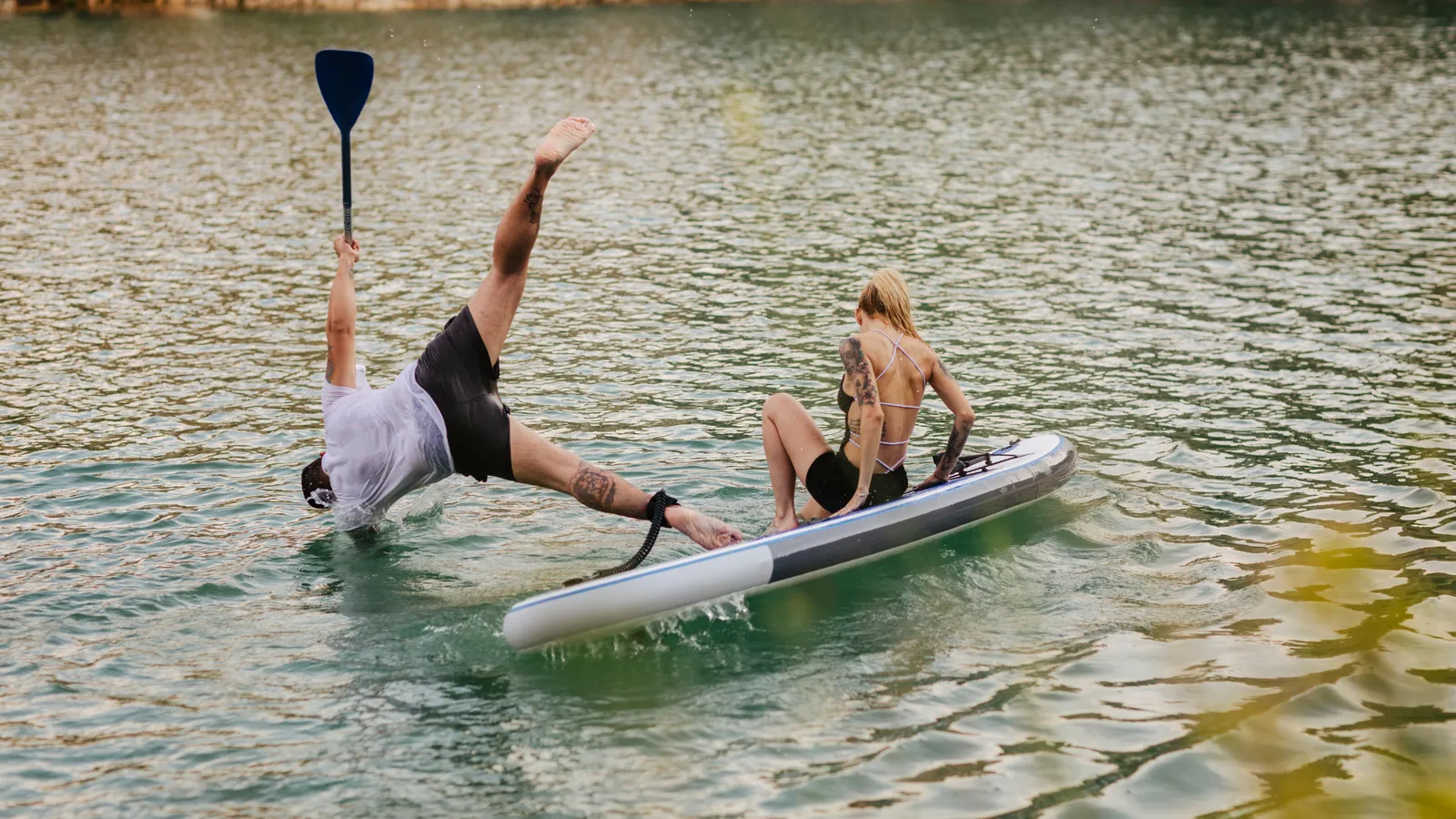
Inflatables are thicker (usually about 6 inches) and sit higher on the water, so wind pushes them around more. They also have softer rails, so they don’t carve a wave like a hard board. If SUP surfing is your main goal, a hard board is the better tool.
Is a cheap inflatable worth it?
This is where people get burned. iROCKER says budget boards often last one to three years before seams or punctures end them, while better-built boards with layered or fused PVC can last five to ten years or more with care. A board that bends in the middle under an adult isn’t worth any price.
Look for a known brand, a real warranty (two to five years is common on good boards), double-layer or fused construction, and a stated weight capacity that comfortably covers you. Our best inflatable paddle boards guide lists boards independent testers rate, and the Board Fitter suggests a size for your weight.
FAQ
Is an inflatable or hard paddle board better for beginners?
For most beginners, an inflatable. It’s easier to store and carry, softer to fall on, and a wide all-around inflatable is plenty stable. Beginners who live on the water and have storage can do just as well with a wide hard board.
Can you leave an inflatable paddle board inflated?
Yes, for days or weeks, out of direct sun and heat. Letting a little air out for long-term storage reduces strain on the seams. See is it OK to leave an inflatable SUP inflated.
Do inflatable paddle boards pop easily?
No. Well-made boards handle rocks, docks and dogs’ claws well. Sharp objects such as shells, fishing hooks and broken glass can puncture them, which is why it’s worth carrying a patch kit.
How long does an inflatable paddle board last?
A good one, looked after, typically lasts five years or more. See how long do inflatable paddle boards last for what shortens and extends its life.