Sometimes. A big, wide, high-volume windsurf board, like an older longboard or a beginner board, can be stood on and paddled like a SUP. Most modern short windsurf boards don’t have enough volume or width to float you steadily without a sail, so you’d struggle to stand on one at all.
Quick answer
- It will work if: the board is long (around 9 feet or more), wide (around 30 inches or more) and has roughly twice your body weight in kilograms as litres of volume.
- It won’t work well if: it’s a short, narrow freeride, wave or slalom board. Those are built to plane under sail, not to float a standing paddler.
- What you’ll need: a SUP paddle, a leash, and ideally a traction pad over the mast track area.
- Want both sports? Look at a windSUP: a paddle board with a mast foot and center fin for a sail.
How windsurf boards and SUPs differ
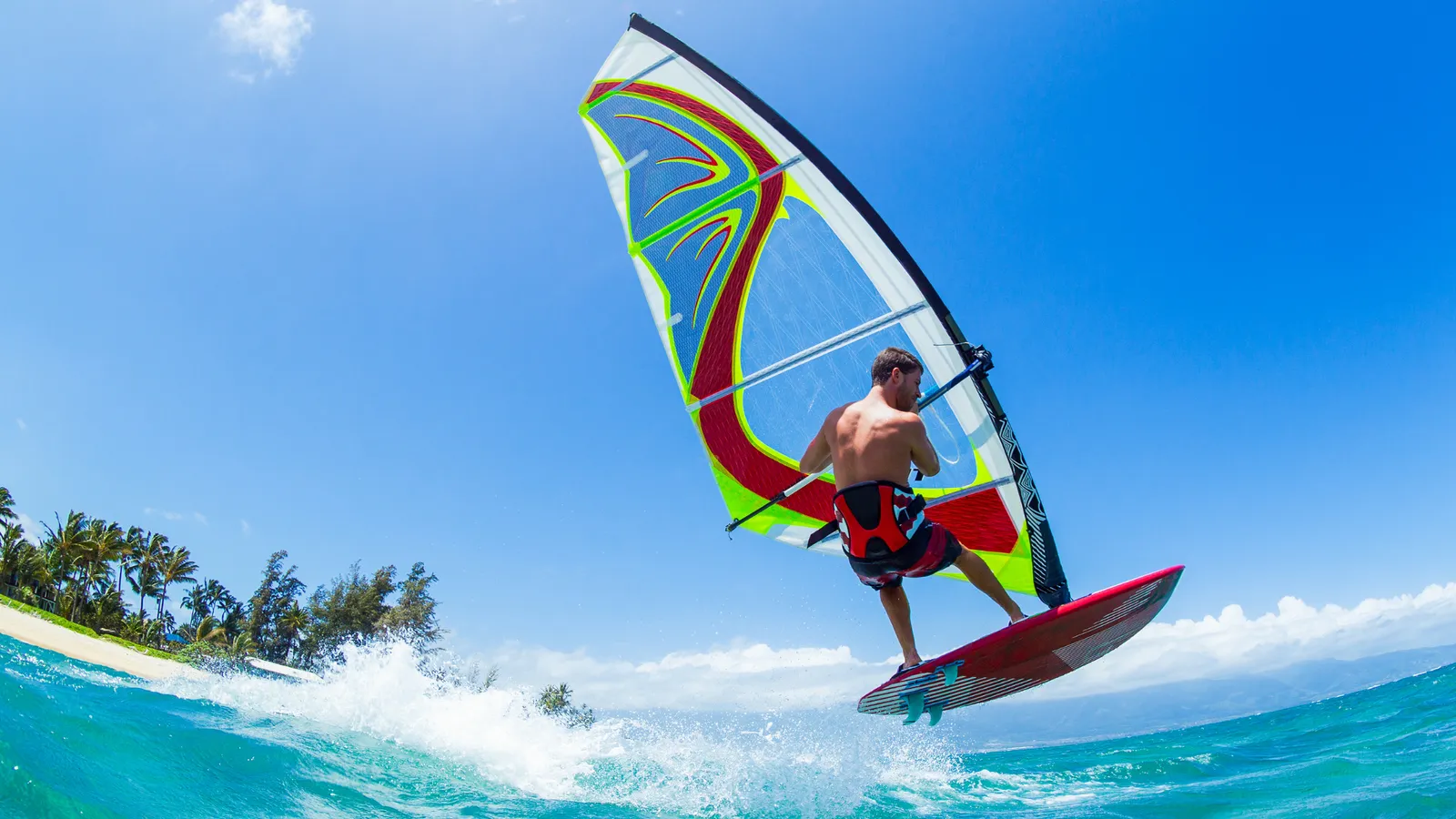
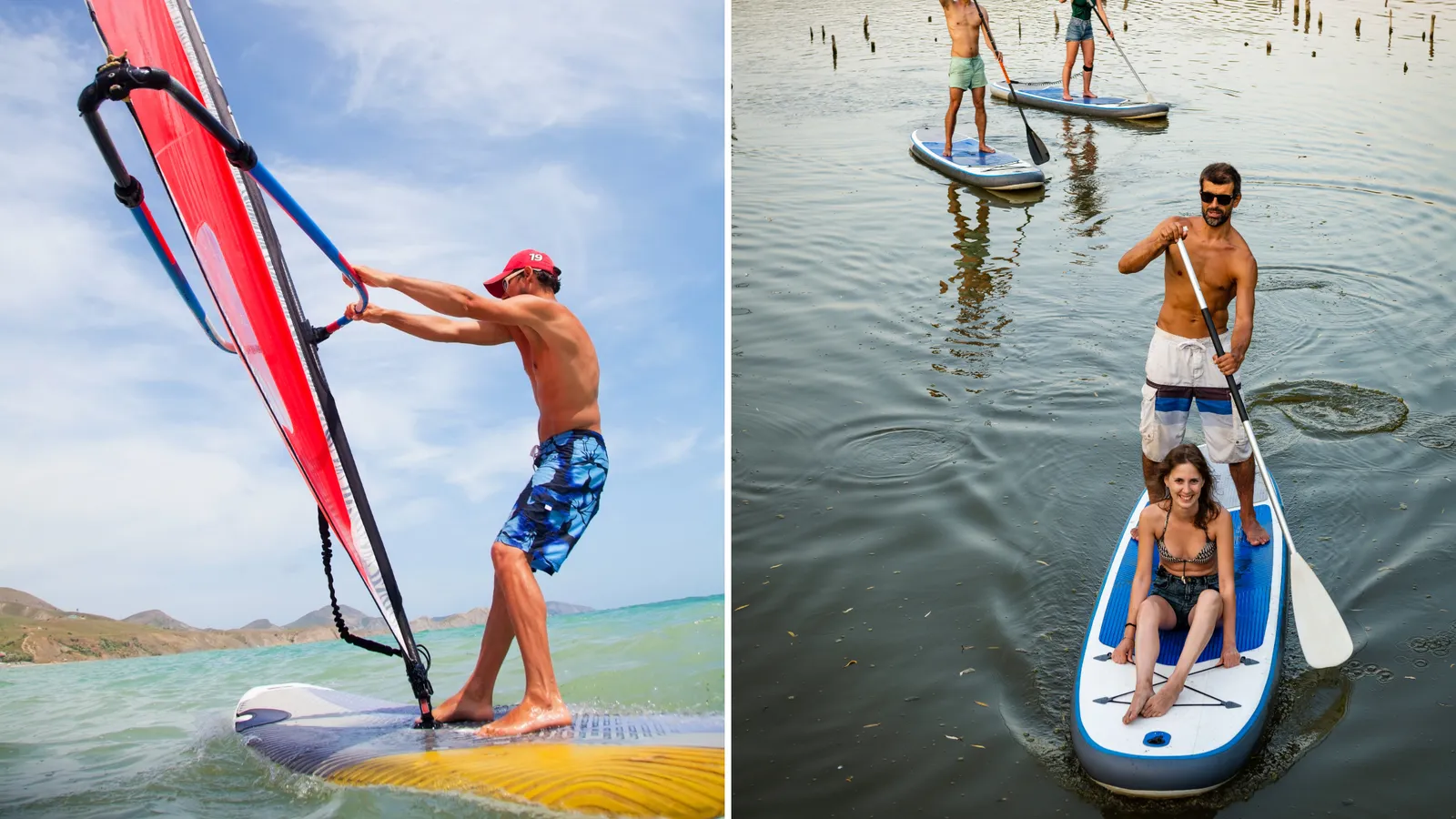
A windsurf board is driven by a sail on a mast, which the rider holds via a boom. Once it’s moving fast, the board planes on top of the water, so it doesn’t need much volume. Experienced windsurfers ride short boards with little more volume than their body weight.
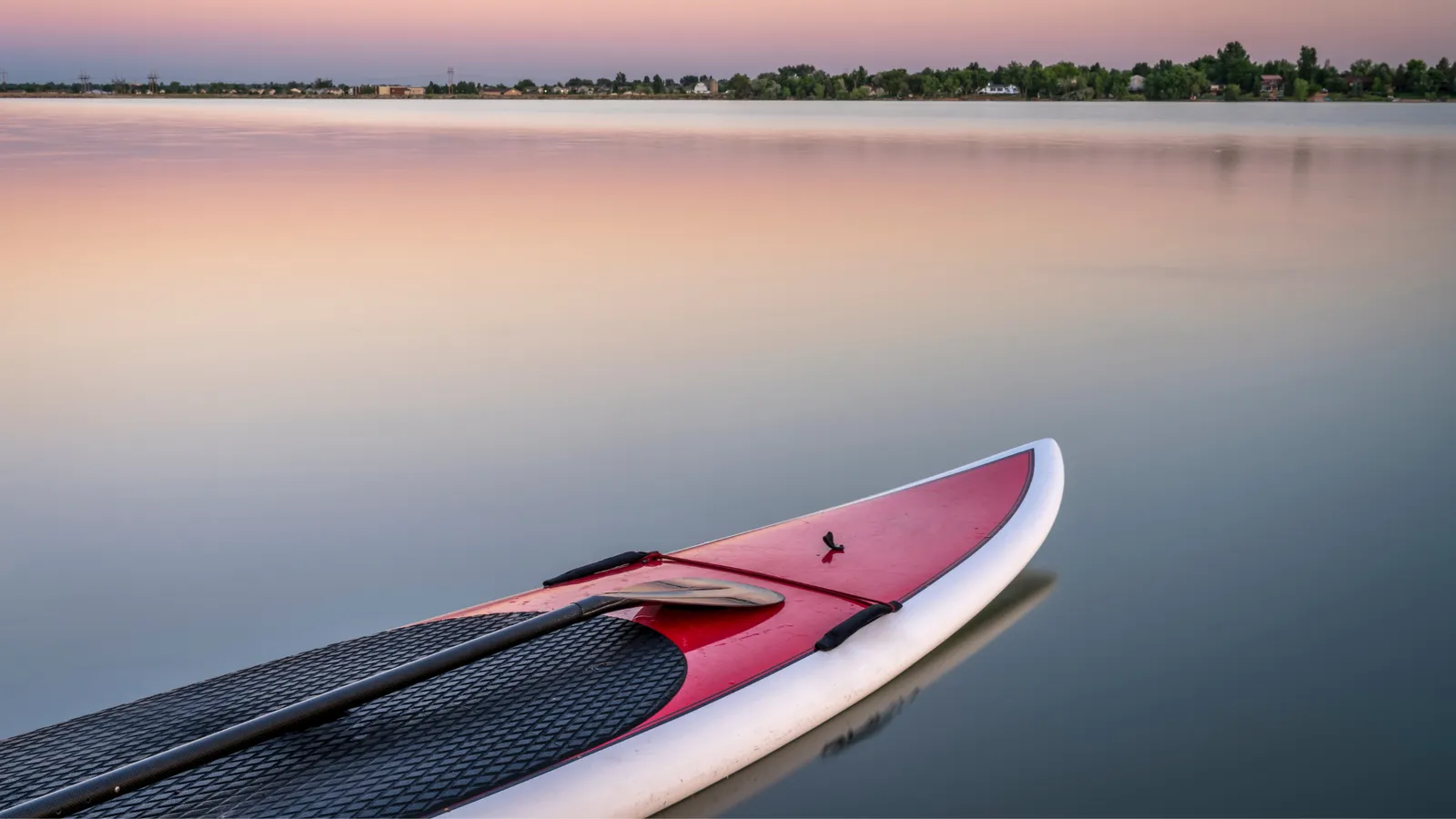
A stand up paddle board is driven only by you. It has to float you high and steady at walking pace, so it’s wide, thick and long for its job.
| Typical windsurf board | Typical all-around SUP | |
|---|---|---|
| Length | About 7’5” (short) to 12’ (long) | About 10’ to 11’6” |
| Width | Often under 28” on short boards; 35”+ on beginner boards | About 30” to 34” |
| Volume | Short boards: close to body weight in kg; learner boards: 150–250 L+ | Usually 170 L+ for hard boards, more for inflatables |
| Fittings | Mast track, daggerboard, footstraps | Center handle, leash plug, deck pad |
Windsurf figures are from a windsurfing learner guide (getwindsurffit). The SUP side reflects the sizes our Board Fitter suggests for most adults.
Which windsurf boards can you paddle?
A learner’s guide to windsurfing suggests a beginner board should have about twice the rider’s weight in kilograms as litres of volume, and calls boards over 200 litres high-volume. That’s the same territory as a paddle board. So:
- Beginner and school boards (wide, 180–250 litres or more): good candidates. Many have a daggerboard slot and soft deck, which help.
- Longboards (around 12 feet with a daggerboard): good for flat-water paddling, and they track straight.
- Freeride, slalom and wave boards (short, under about 150 litres): poor choices. Most adults will find them too tippy to stand on without a sail.
Quick test: stand on it in calm, waist-deep water without the rig. If it sinks to the deck or rolls under you, it won’t make a usable SUP.
How to set up a windsurf board for paddling
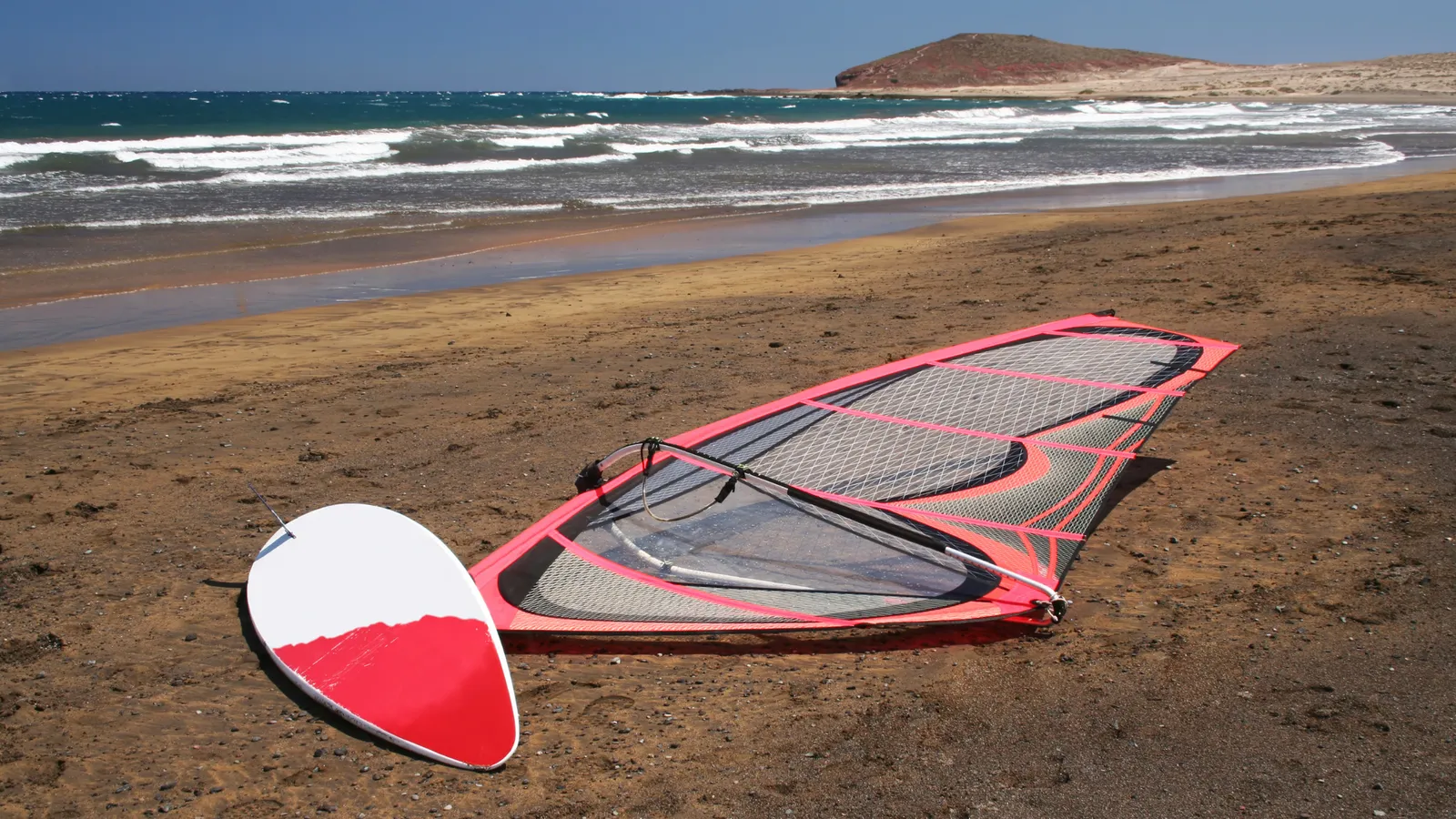
- Take off the rig. Remove the mast, sail and boom. Leave the mast track alone; there’s no need to fill it.
- Remove the footstraps if they’re where you’d stand. Don’t fill the screw inserts with expanding foam; just put the screws back in so water can’t get in.
- Check for damage. Older boards can have cracks or soft spots. Water in the core makes the board heavy and can spread damage. Fix dings before you paddle.
- Add traction. If the deck is slick, stick down an EVA traction pad (the kind sold for SUPs) where you’ll stand, or use surf wax.
- Keep or remove the daggerboard. Down, it helps the board track straight but catches on weeds and shallows. Up, the board will turn easily but spin with every stroke.
- Add a leash. Use the existing leash plug, or a strong deck-mount plug if there isn’t one.
- Get a SUP paddle sized to your height. Our guide to how to hold a paddle board paddle covers technique.
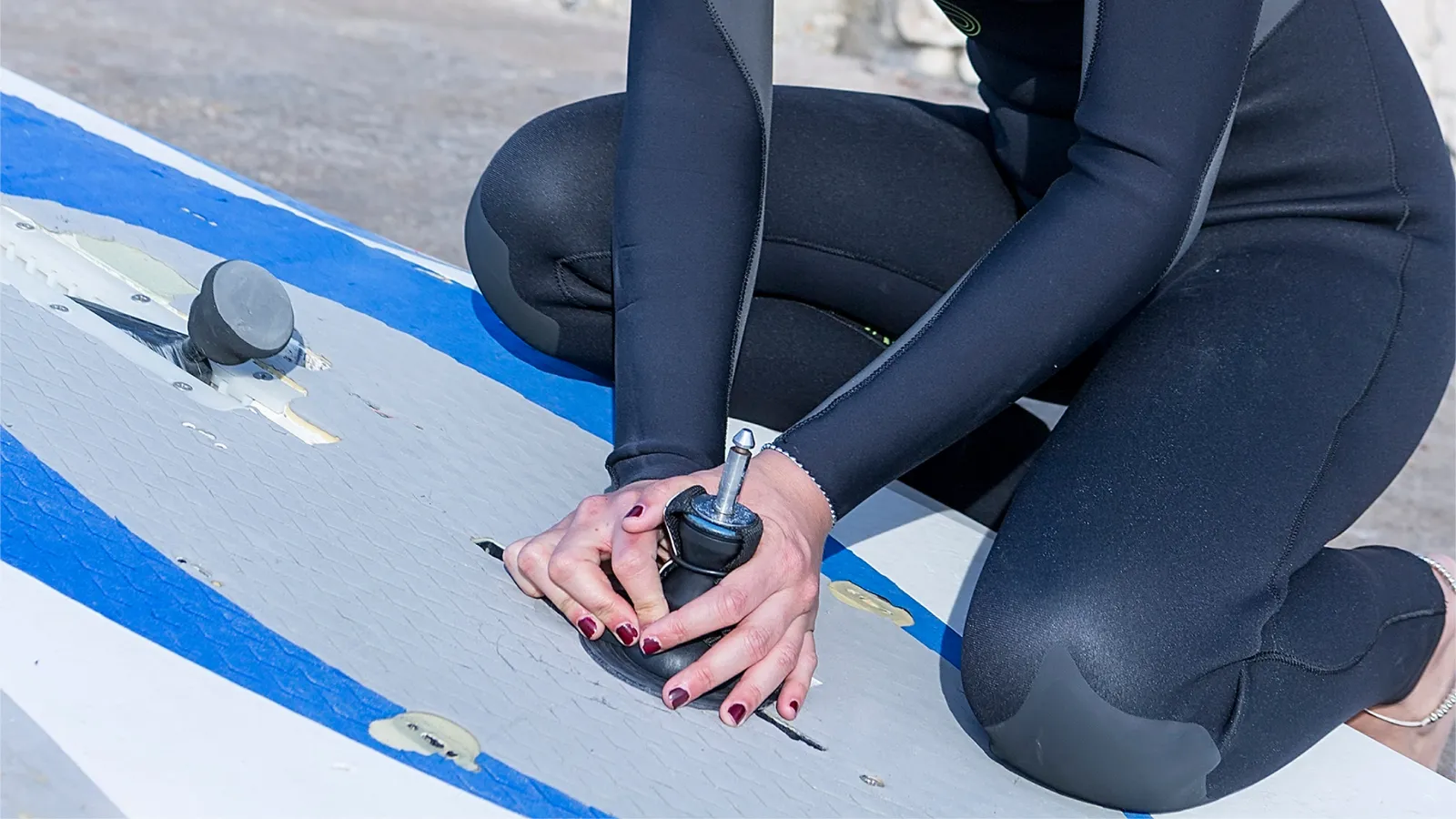
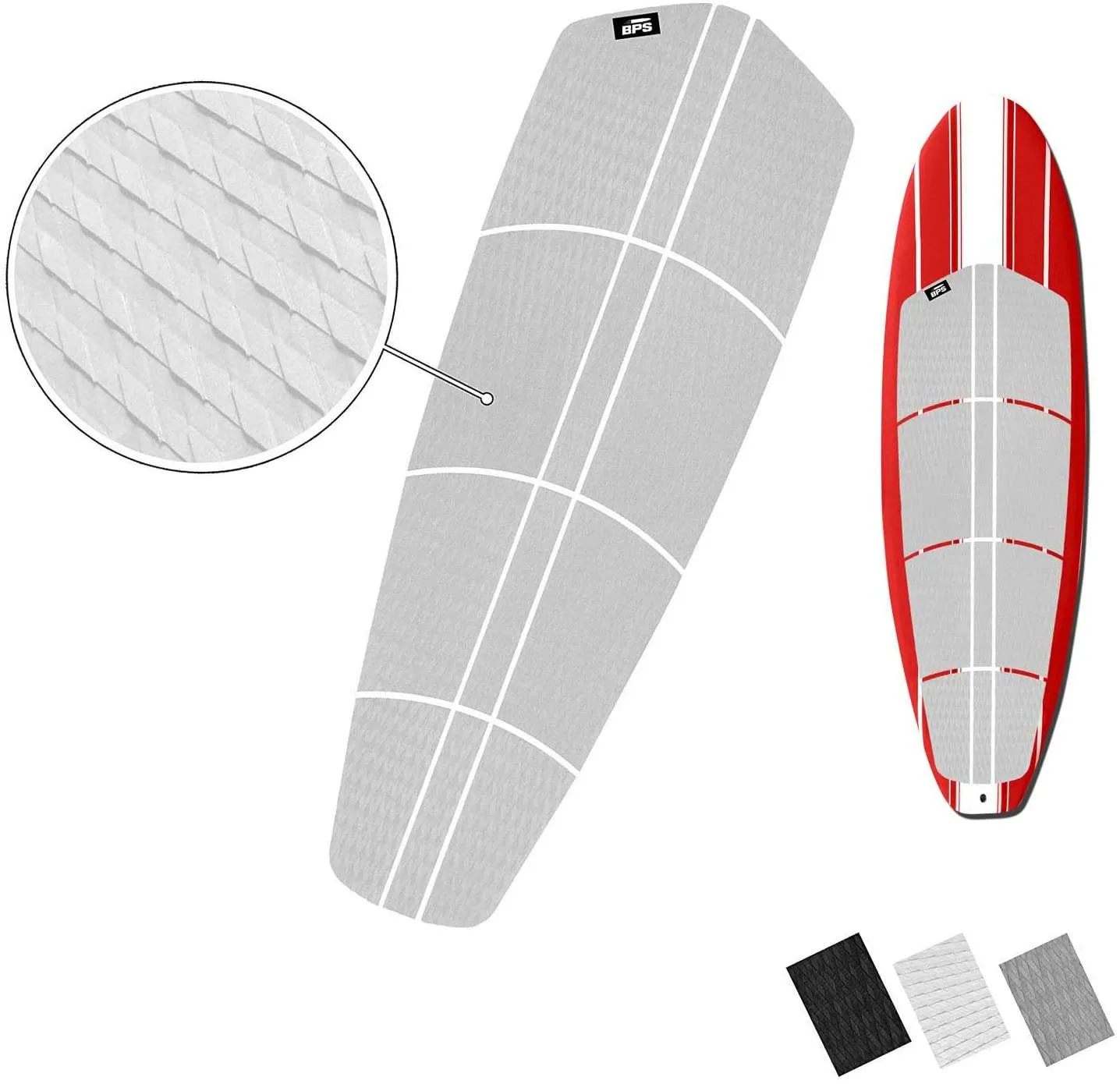
Don’t try to reshape a board’s rocker with heat. It won’t work and it can delaminate the board.
What to expect on the water
- Less stability than a real SUP, even with a big board. Start on calm water, kneeling.
- Poor tracking without the daggerboard. You’ll need more switch-side strokes to go straight; see how to paddle a SUP straight.
- More wind push. Wide windsurf boards act like a raft in a breeze, so paddle into the wind first.
- Safety gear still applies. Wear a leash and carry a PFD. Outside swim and surf areas, a paddled board counts as a vessel in the US.
WindSUPs: a board for both
If you want to windsurf and paddle board, a windSUP is the cleaner answer. It’s a paddle board with a mast foot (or mast track) and a center fin or daggerboard so it can take a small sail. Several SUP and windsurf brands make them, including inflatable versions. For example, Red Paddle Co’s 10’7” Wind is an inflatable 33 inches wide with 296 litres of volume and a built-in mast foot, according to retailer specs.
A windSUP paddles well and sails gently in light wind. It won’t plane like a real windsurf board, so it suits learning to sail more than performance windsurfing.
FAQ
Can you stand up paddle on a windsurf board without the sail?
Yes, if the board has enough volume and width to float you steadily. Big beginner boards and longboards usually do. Short performance boards usually don’t.
How much volume do I need to paddle a windsurf board?
As a rough guide, aim for at least twice your body weight in kilograms as litres. A 180 lb (82 kg) adult would want 160 litres or more, and more is easier.
Can you put a sail on a paddle board?
Only if it has a mast foot or insert, like a windSUP. Don’t screw a mast base into a normal SUP. You can add a wind sail kit made for paddle boards that clips to the D-rings, but that’s for downwind cruising, not windsurfing.
Is windsurfing or paddle boarding easier to learn?
Paddle boarding. Most people can paddle a SUP in their first session on calm water. Windsurfing takes longer because you’re managing the sail as well as your balance. See what does SUP mean for the basics.