The best way to store a paddle board is clean, dry and indoors, out of direct sun, in a space that stays roughly between 40°F and 110°F. Rest a hard board on a padded wall or ceiling rack (on its rail or deck-side down, never on its nose), and deflate an inflatable and roll it loosely if you won’t use it for more than a couple of weeks.
Sun, heat and pressure points do more damage to a stored board than anything else. Get those right and the rest is about saving space.
Quick answer
- Clean and dry it first, with fins and leash removed.
- Indoors if at all possible: garage, shed, spare room. ISLE recommends a range of about 40–110°F.
- Hard board: padded wall rack (on its rail) or ceiling rack, weight spread across at least two wide supports.
- Inflatable, short term: leave it inflated, let a few PSI out, keep it in the shade.
- Inflatable, long term: deflate, roll loosely from the nose toward the valve, store in its bag somewhere cool.
- Never: in direct sun, in a hot car or attic, standing on its nose, or wrapped in plastic.
Before you store it
- Rinse it with fresh water, especially after salt water, and get sand out of the fin box, leash plug and valve.
- Dry it completely. Moisture trapped in a bag or under a cover is what causes mildew and smells. More in how to clean a stand up paddle board.
- Take off the fins and leash. ISLE recommends removing fins for long-term storage so they can’t get stuck in the fin box.
Where to store a paddle board
Indoors (best)
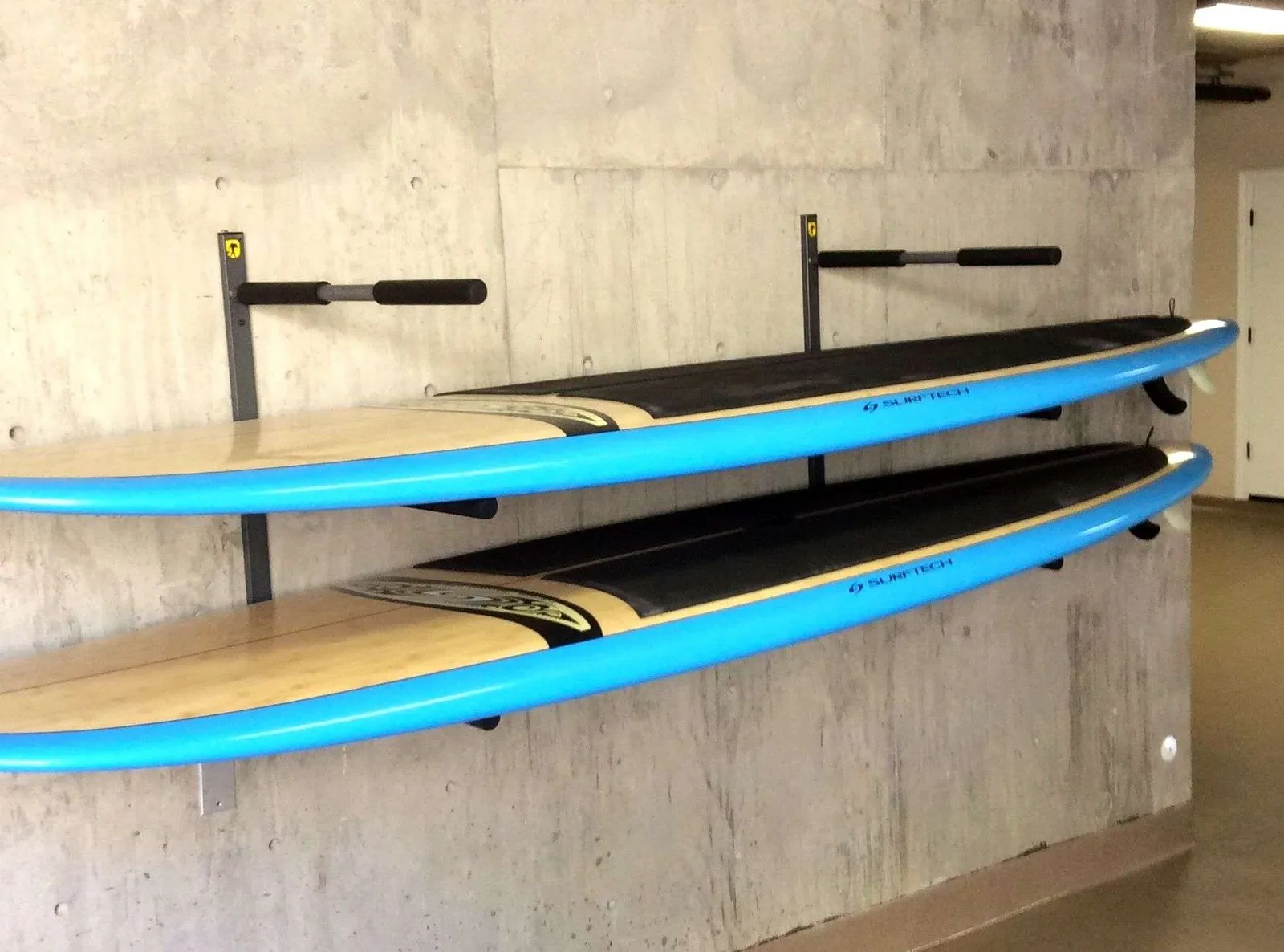
A garage, shed, basement or spare room protects the board from UV, heat and theft. Look for somewhere that:
- Doesn’t get very hot. Avoid attics, the wall of a garage that faces the afternoon sun, and anywhere near a heater or furnace.
- Isn’t damp. A wet basement is nearly as bad as outside for an inflatable rolled in its bag.
- Keeps it out of the way of cars, bikes and the lawn mower, which cause more dings than anything on the water.
Outdoors (only if you have to)
ISLE’s advice is not to store boards outside at all, because sunlight breaks down the board’s materials over time. If outside is your only option:
- Get it in full shade, under a deck, eave or carport.
- Use a reflective UV board cover. See our best paddle board UV covers.
- Keep rain off it with a tarp suspended above the board, not wrapped around it, so air can circulate and water can’t pool.
- Raise it off the ground on a rack so it isn’t sitting in puddles or leaves.
- Lock it to the rack or a post. See how to lock up a paddle board.
How to store a hard paddle board
On a wall rack
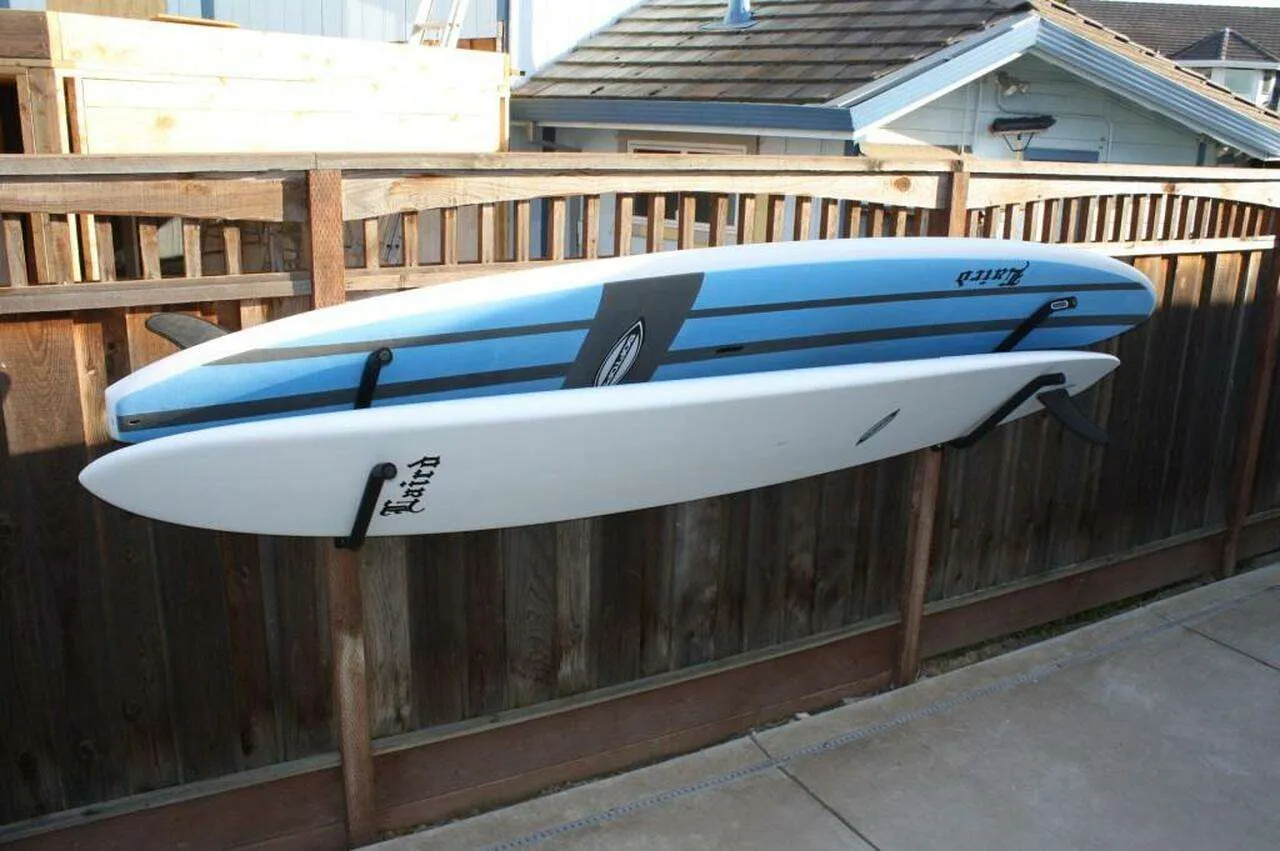
This is the most common setup. Two or more padded arms support the board, either:
- On its rail (on edge), deck facing out and hull to the wall, or
- Flat, deck-side down, if the rack arms are long enough.
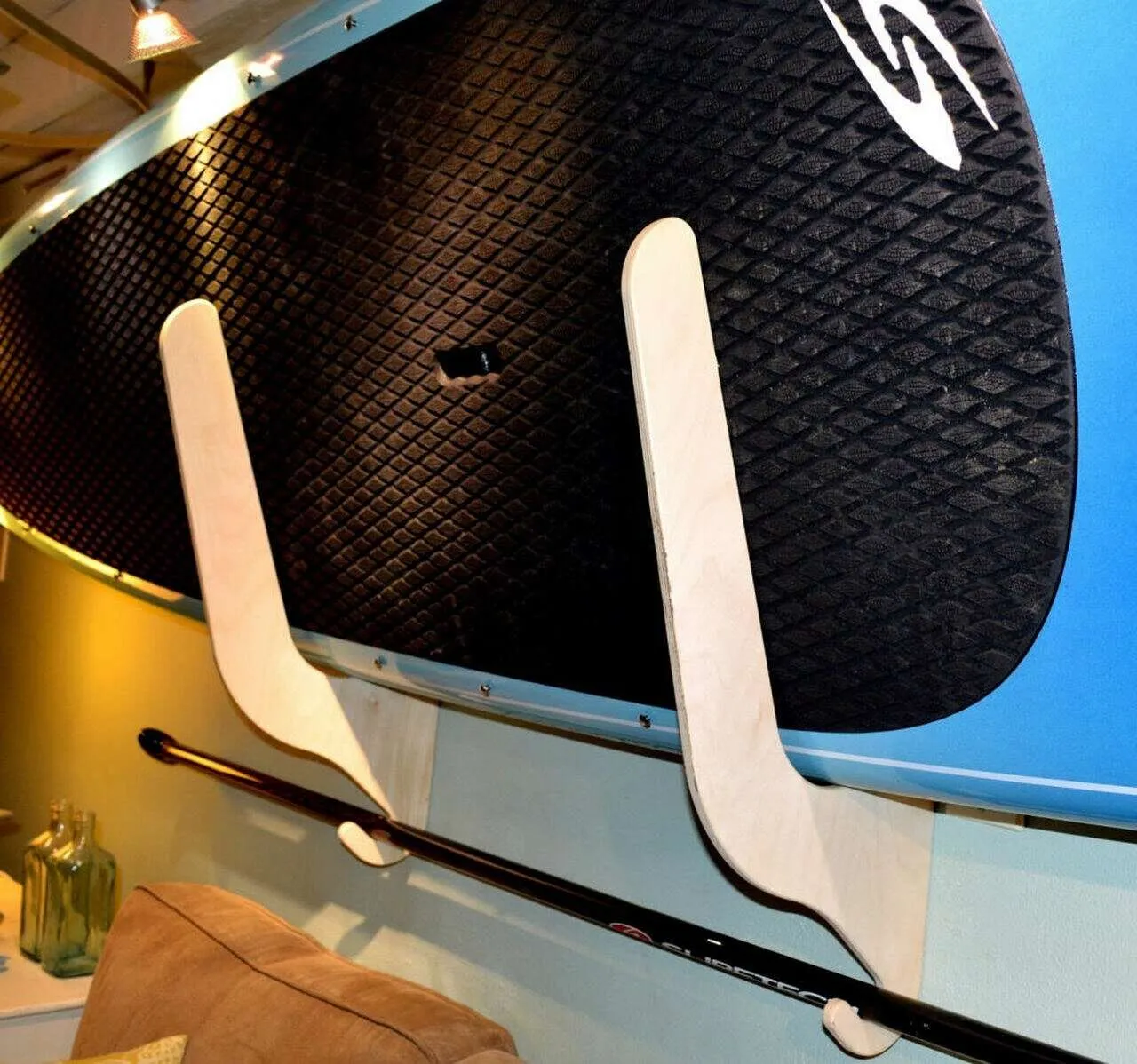
Use racks with wide, padded supports placed about a third of the way in from each end so the weight is spread out. Our best paddle board storage racks has wall, freestanding and ceiling options.
Hanging from the ceiling
A ceiling rack or a pair of padded slings is great in a garage, since it uses space nothing else needs. Hang the board deck-side down, with the hull facing the ceiling, and use wide straps rather than thin rope that can dent the rails.
Leaning against a wall
Fine for a few days, not ideal long term. Stand it on its tail (never on its nose, which ISLE notes is usually the weakest point), on a towel or pad, and tie it to the wall so it can’t slide or fall.
Things to avoid with hard boards
- Lying flat on concrete. Rest it on padding or a rack.
- Stacking heavy things on top.
- Leaving it in a hot car, or in sun deck-side up. A dark deck pad absorbs heat and, in extreme cases, can cause the deck to delaminate.
How to store an inflatable paddle board
For a few days to a couple of weeks
You can leave it inflated. Glide suggests letting it down a little (it mentions roughly 10–12 PSI) and keeping it somewhere cool and shaded. Heat makes the air expand, and in a hot car or garage that can push the pressure high enough to stress seams. More detail in is it OK to leave an inflatable SUP inflated.
For the off-season
- Clean it and let it dry completely.
- Remove the fins.
- Open the valve and let the air out.
- Fold it lengthwise if your board’s manual allows, then roll it from the nose toward the valve so trapped air can escape.
- Roll it snugly but not tightly. Glide warns that tight rolls stress the seams.
- Store it in its bag (or a breathable one) in a cool, dry, shaded spot. Glide suggests a few silica gel packs to absorb leftover moisture.
Glide’s storage range for inflatables is a little cooler than ISLE’s general advice: roughly 40–85°F. A closet or insulated garage is ideal. If you have the space, some owners prefer to store inflatables partly inflated all winter to avoid creases; that’s fine too, as long as it’s somewhere cool.
Off-season checklist
- Clean and fully dry the board, leash, fins and paddle.
- Check for dings, cracks or soft spots on hard boards and fix them before storage.
- On inflatables, check the valve and seams for leaks while it’s still inflated.
- Store the paddle apart; take an adjustable paddle apart so the clamp doesn’t seize.
- Keep the pump, repair kit and fins together in the bag so nothing goes missing.
FAQ
Should I store my paddle board on its side or flat?
Either works for a hard board on a padded rack. On its rail (side) saves space on a wall; flat and deck-side down suits ceiling racks. Avoid standing it on its nose.
Can I store my paddle board in the garage?
Yes, as long as it isn’t in direct sun from a window or a side that bakes in the afternoon, and the garage doesn’t swing to extreme temperatures. Get it off the floor on a rack.
Is it OK to store a paddle board outside in winter?
It’s not recommended. Cold on its own isn’t the main problem, but sun, moisture and freeze-thaw cycles all add wear. If it must stay outside, keep it covered, raised and in the shade, and check it for water inside if it’s a hard board.
Should I store an inflatable paddle board inflated or deflated?
Inflated (with a little air let out) is fine for short spells in a cool, shaded spot. For long-term storage, deflate it, roll it loosely and keep it in its bag.
How long does a stored paddle board last?
Stored well, a board can last many seasons. Sun and heat are what shorten its life most.