Yes, you can sit on a paddle board. You can sit, kneel, lie down or stand, and plenty of people spend whole sessions sitting, especially when fishing, resting or learning. With a clip-on kayak seat and a kayak paddle, most inflatable boards paddle like a sit-on-top kayak.
Quick answer
- Just resting? Sit cross-legged or with legs over the sides in the middle of the board, near the carry handle.
- Paddling sitting down? Shorten your SUP paddle or use a kayak paddle. A full-length SUP paddle is awkward from a seat.
- Want back support? Clip a kayak seat to the board’s D-rings.
- Learning? Kneeling is the best stepping stone between sitting and standing.
How to sit on a paddle board
- Sit in the middle. The carry handle marks the balance point. Sit just behind it so the nose doesn’t dig in.
- Keep your weight centered. Cross your legs, stretch them forward, or hang them off each side for extra stability.
- Hold the paddle across your lap when you’re not using it, so it can’t float away.
- Keep your leash on. Sitting feels safe, but if you slip off or a wake rolls you, the board can blow away fast.
Paddling while sitting
A SUP paddle is sized for standing, so from a seat it’s long and clumsy. You have three options:
- Choke down on the SUP paddle. Hold the shaft lower with your top hand. It works for short stretches.
- Shorten an adjustable paddle to its lowest setting.
- Use a kayak paddle (two blades). This is the most efficient way to paddle seated. Some brands make a clip-on second blade that turns their SUP paddle into a kayak paddle.
Kneeling: the halfway house
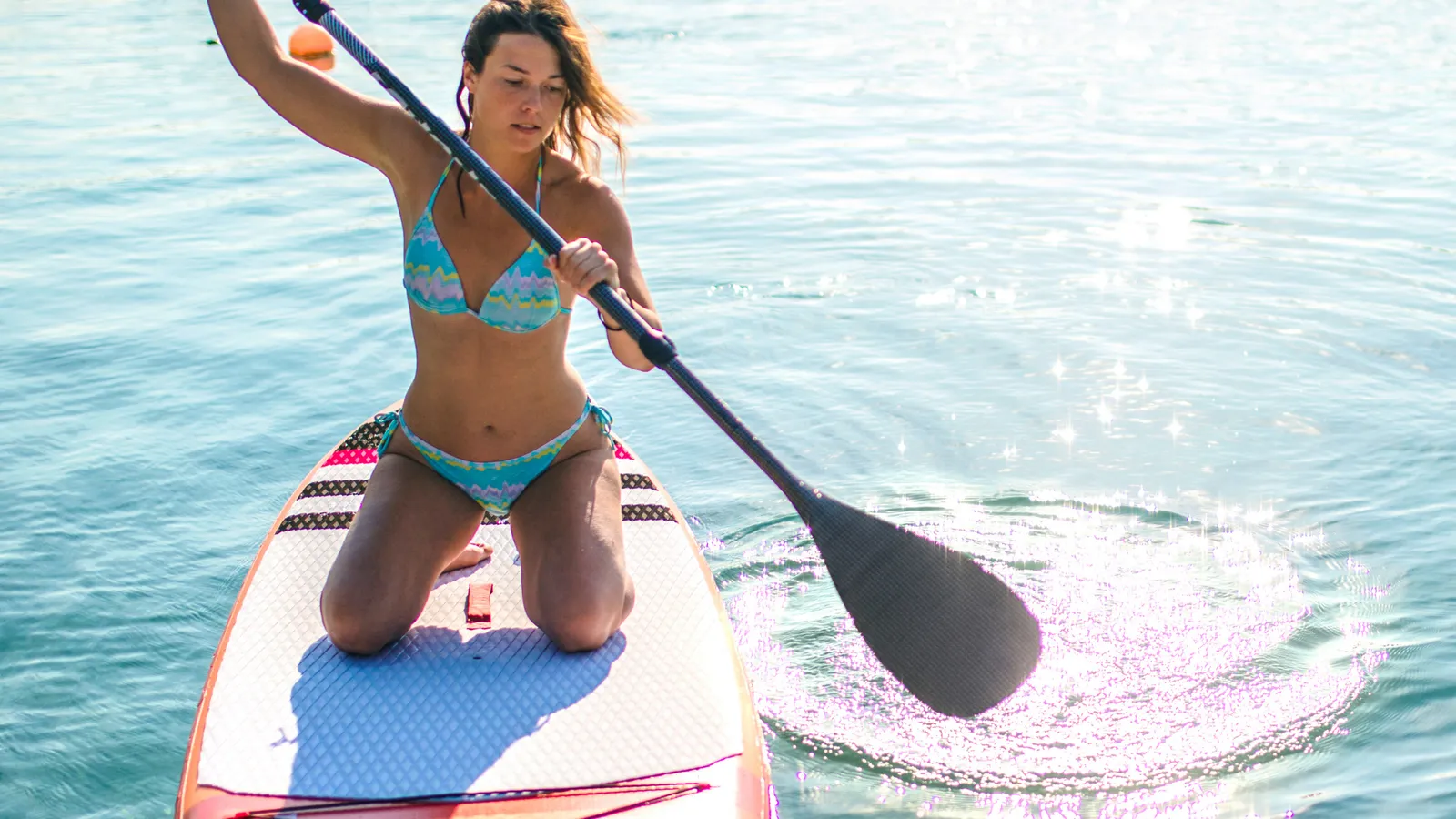
Kneeling lowers your center of gravity but keeps you in a good position to paddle. It’s how most lessons start, and it’s what to do when wind or chop picks up. Kneel just behind the handle with your knees about hip-width apart, choke down on the paddle, and take short strokes close to the rail.
Once you’re steady on your knees, standing up is one step away. Our guide on how to improve your balance for paddle boarding covers the next part.
Adding a kayak seat
A SUP kayak seat is a padded seat with a backrest and straps that clip to D-rings on the deck. Most inflatables have four D-rings in the right place for this. Starboard’s conversion kit, for example, includes a seat that clips to four D-rings plus a footrest and a kayak blade add-on.
Things to check before you buy:
- Your board has D-rings around the middle, roughly where you’d sit.
- The seat is height-appropriate. A low seat keeps you stable; a tall one is comfier but less steady.
- You have a kayak paddle or a kayak blade conversion.
If you’d rather have a board built for it, look at paddle board kayak hybrids, which come with seats and foot braces.
What you can do sitting down
Fishing
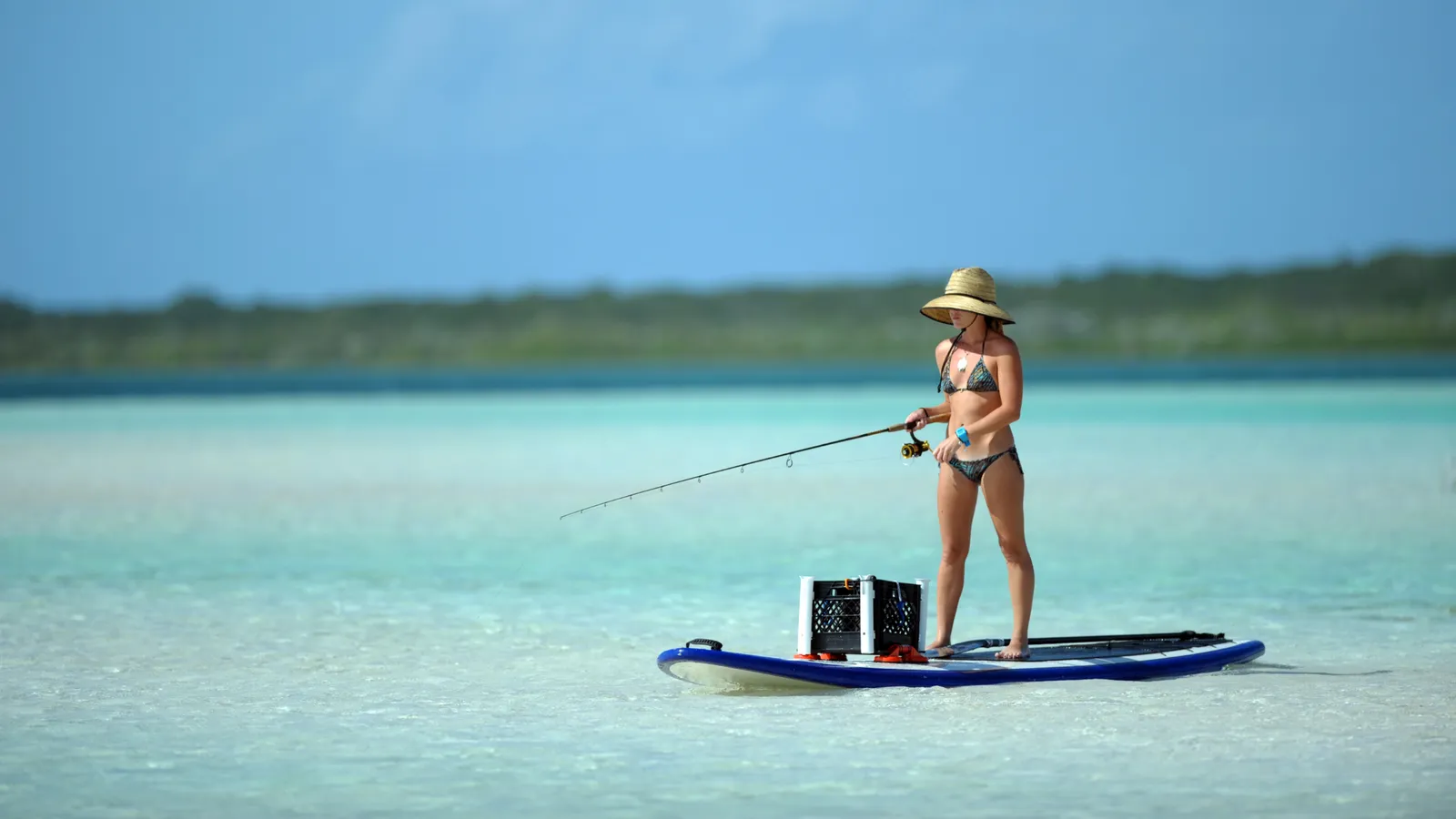
Sitting makes casting, unhooking and handling fish easier and steadier. Fishing boards are wider and often come with seat mounts and rod holders. See our best fishing paddle boards.
Kayak-style touring
With a seat and kayak paddle, you can cover distance with your legs resting, then stand up again when you want a change. It’s a good way to give your feet and back a break on a long paddle.
Relaxing and recreational paddling
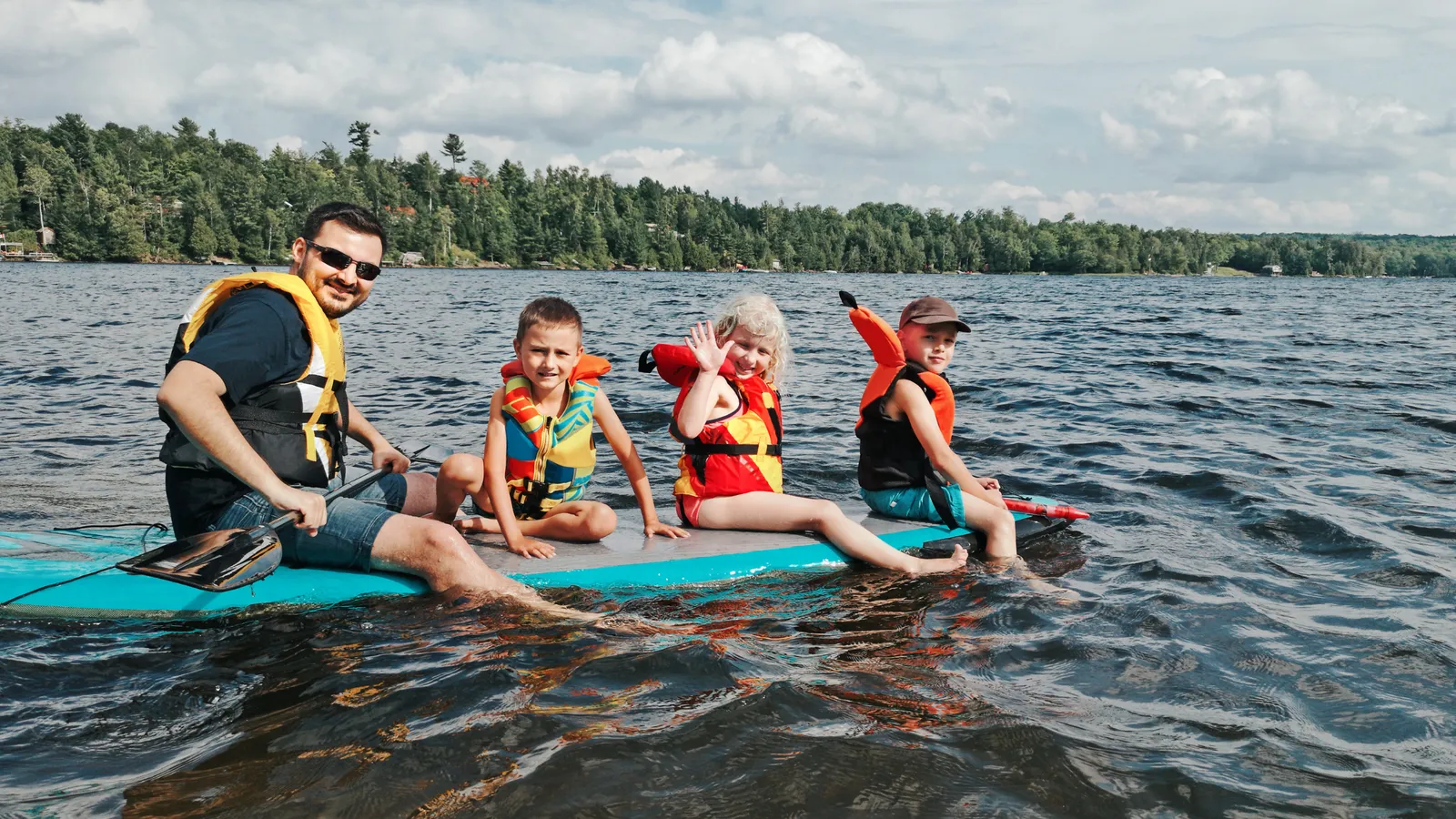
Plenty of paddlers just drift, swim off the board, have lunch or watch wildlife. A board makes a great floating platform for that.
Why sitting is a good idea sometimes
- It’s more stable. A lower center of gravity means fewer falls, which helps beginners and nervous paddlers build confidence.
- It’s safer in bad conditions. If wind picks up or boat wakes roll through, kneel or sit down. You’ll catch less wind and stay on the board.
- It rests your legs and feet. Standing on a board for a couple of hours is tiring. Sitting lets you keep going.
- It’s easier with passengers. With a child or dog aboard, sitting keeps the board steadier.
FAQ
Is it easier to sit or stand on a paddle board?
Sitting is easier to balance, but standing is easier to paddle efficiently with a SUP paddle. Most beginners start sitting or kneeling, then stand once they’re comfortable.
Can two people sit on a paddle board?
Yes, if the board’s weight capacity covers both of you plus gear. Sit one behind the other, both near the middle. A wide board of 10’6” or longer works best. The Board Fitter can size a board for you plus a kid or a dog.
Do I need a life jacket if I’m sitting?
The rules don’t change whether you sit or stand. Outside swimming and surf areas, US law treats a paddle board as a vessel, so you need a Coast Guard-approved life jacket with you. See do you need a life jacket on a paddle board.
Can you sit on a paddle board in the ocean?
Yes. In small swell or chop, sitting or kneeling is often the steadiest position. Keep your leash on, and don’t sit in the surf zone where a wave can push the board into you.