Yes. In the US, a stand up paddle board counts as a vessel whenever you’re outside a designated swimming, surfing or bathing area, so federal rules require a Coast Guard-approved life jacket for each person on the board. Adults 13 and older only have to carry it, but children under 13 must wear one, and some states require more.
Quick answer
- Required (federal): one USCG-approved wearable life jacket per person, a whistle or other sound-producing device, and a light if you paddle after sunset.
- Kids under 13: must wear their life jacket, not just carry it.
- Inflatable belt packs: count only if you’re wearing them, and most are approved only for people 16 and older.
- Exempt: inside a designated swimming, surfing or bathing area.
- State rules: can be stricter. Check your state’s boating agency before you go.
- Our advice: wear it. A life jacket strapped to the deck is hard to reach once you’re in the water.
Why the rules apply to paddle boards
The Coast Guard classifies a SUP as a vessel when it’s used beyond the narrow limits of a swimming, surfing or bathing area. That puts you under the same basic equipment rules as a canoe or kayak:
- A Coast Guard-approved life jacket for each person, in good condition and the right size.
- A whistle or other sound-producing device.
- Navigation lights after sunset. For a paddle board that usually means a white light, such as a flashlight or headlamp, ready to show in time to avoid a collision.
Those rules come with a duty to follow the navigation rules and report accidents, like any other boat.
Why wearing one matters
The Coast Guard’s 2024 boating statistics recorded 29 stand up paddle board deaths, up from 11 the year before. Across all boating deaths, about three-quarters were drownings, and 87% of the people who drowned weren’t wearing a life jacket.
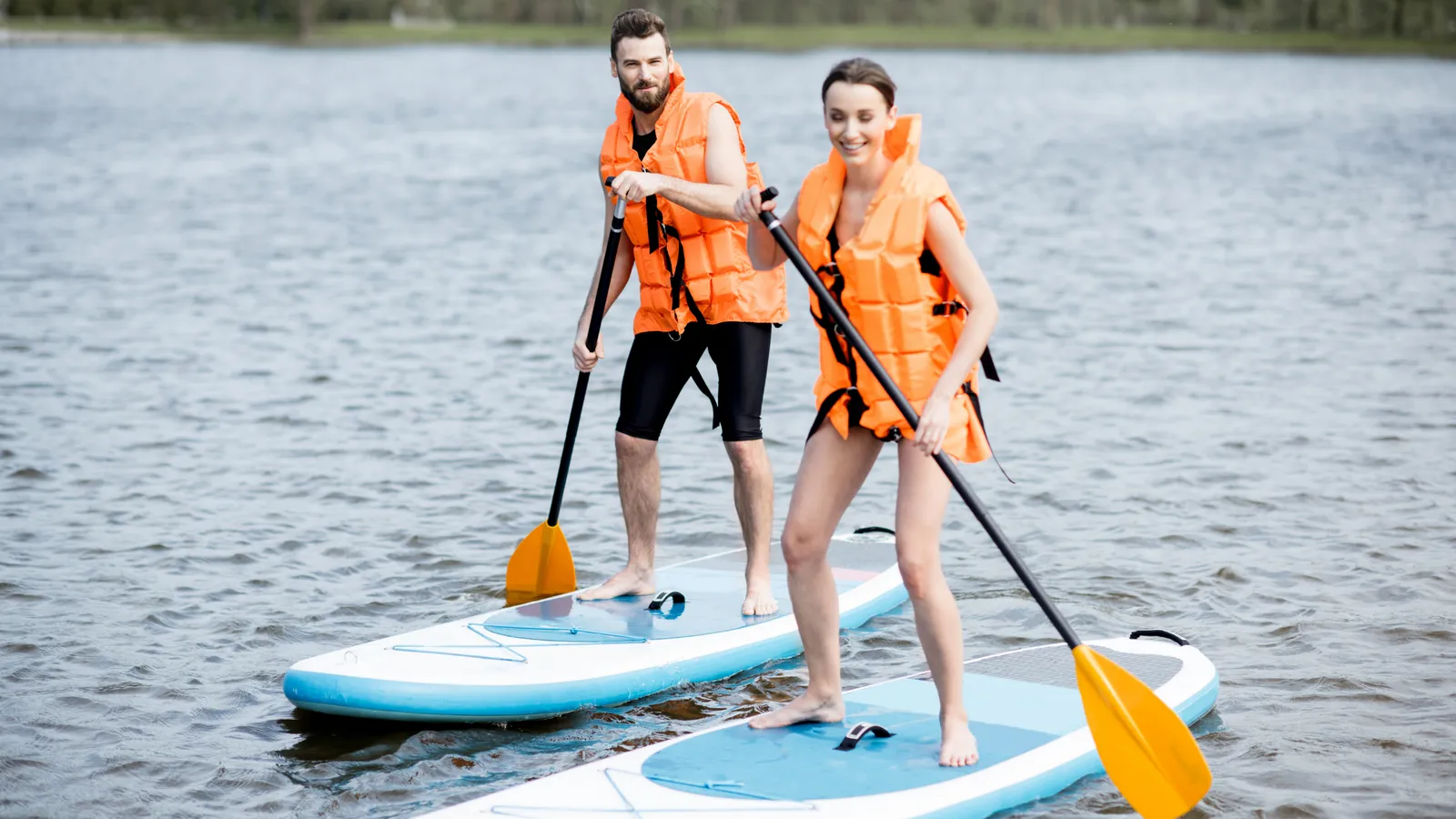
Good swimmers drown too. Sudden immersion in cold water can make you gasp and lose control of your breathing. A fall can knock the wind out of you or hit your head on the board. Wind can blow the board away faster than you can swim if your leash fails. A worn life jacket keeps you afloat through all of that.
Choosing a life jacket for paddle boarding
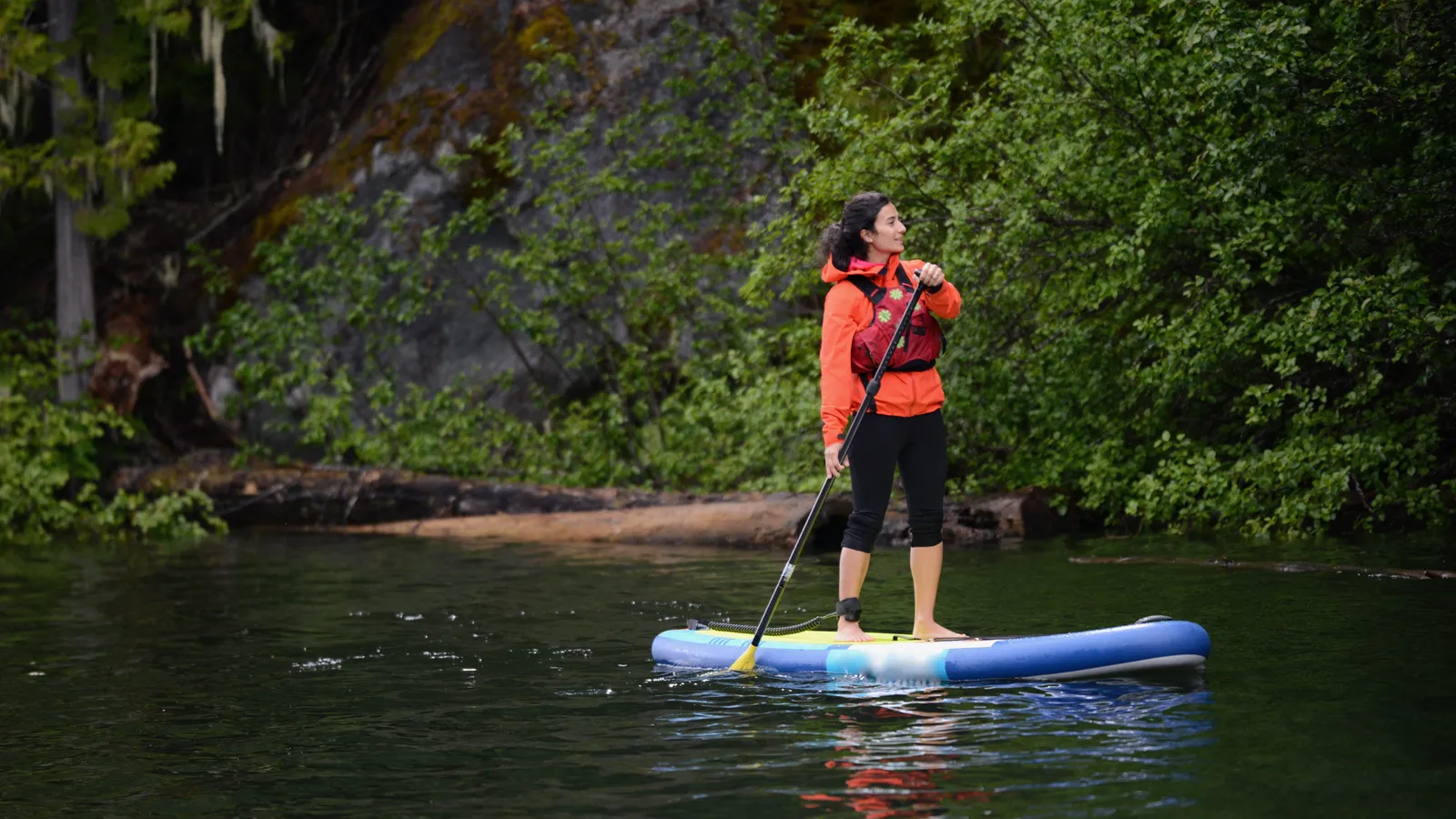
There are two main styles that work for SUP:
- Low-profile foam vests. Always work, need no maintenance, and are suitable for everyone, including non-swimmers and kids. Paddling-specific vests have large arm holes so they don’t rub.
- Inflatable waist belts or vests. Very comfortable and barely noticeable. You pull a cord to inflate them, so they suit confident swimmers only. Check the CO2 cartridge regularly, and remember they only count if you’re wearing them.
Our best PFDs for SUP roundup compares specific models.
Reading the new labels
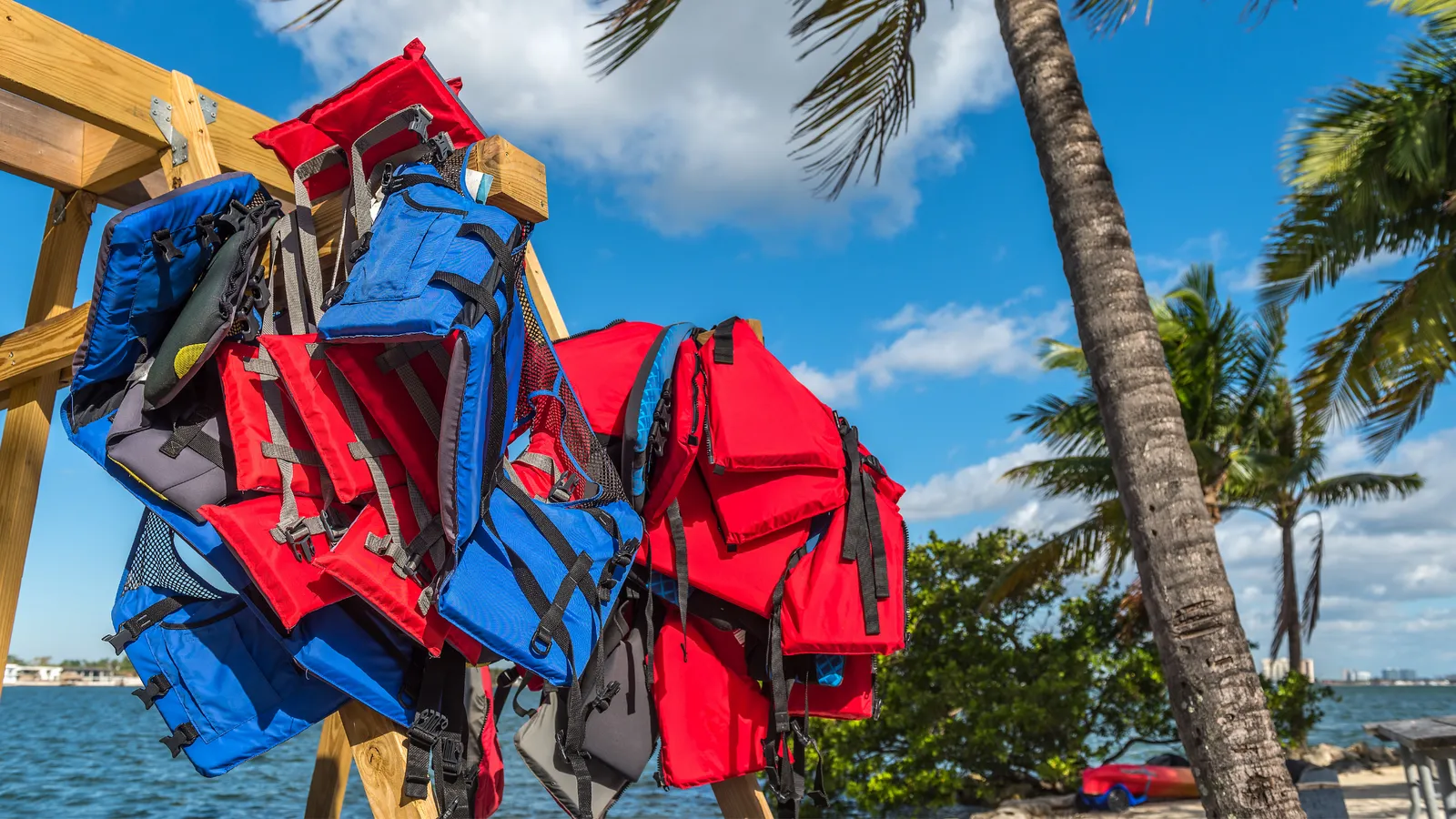
In late 2024 the Coast Guard adopted a new approval system harmonized with Canada, which took effect in 2025. New life jackets no longer carry the old Type I, II, III and V labels. Instead they show:
- A performance level (Level 50, 70, 100, 150 or 275). The number is minimum buoyancy in newtons. Level 70 is about 15.7 lb of buoyancy, which is what most paddling vests have.
- Icons showing whether the jacket turns you face-up, and which activities it isn’t suitable for (a crossed-out icon).
- Conditions of use, such as “must be worn” or minimum age.
Older Type-labeled life jackets stay legal to use as long as they’re in good condition. For most paddle boarding on lakes, bays and near shore, a Level 70 vest (or an old Type III) is the usual choice. For open water or cold water where rescue could take longer, consider a higher level.
Getting the fit right
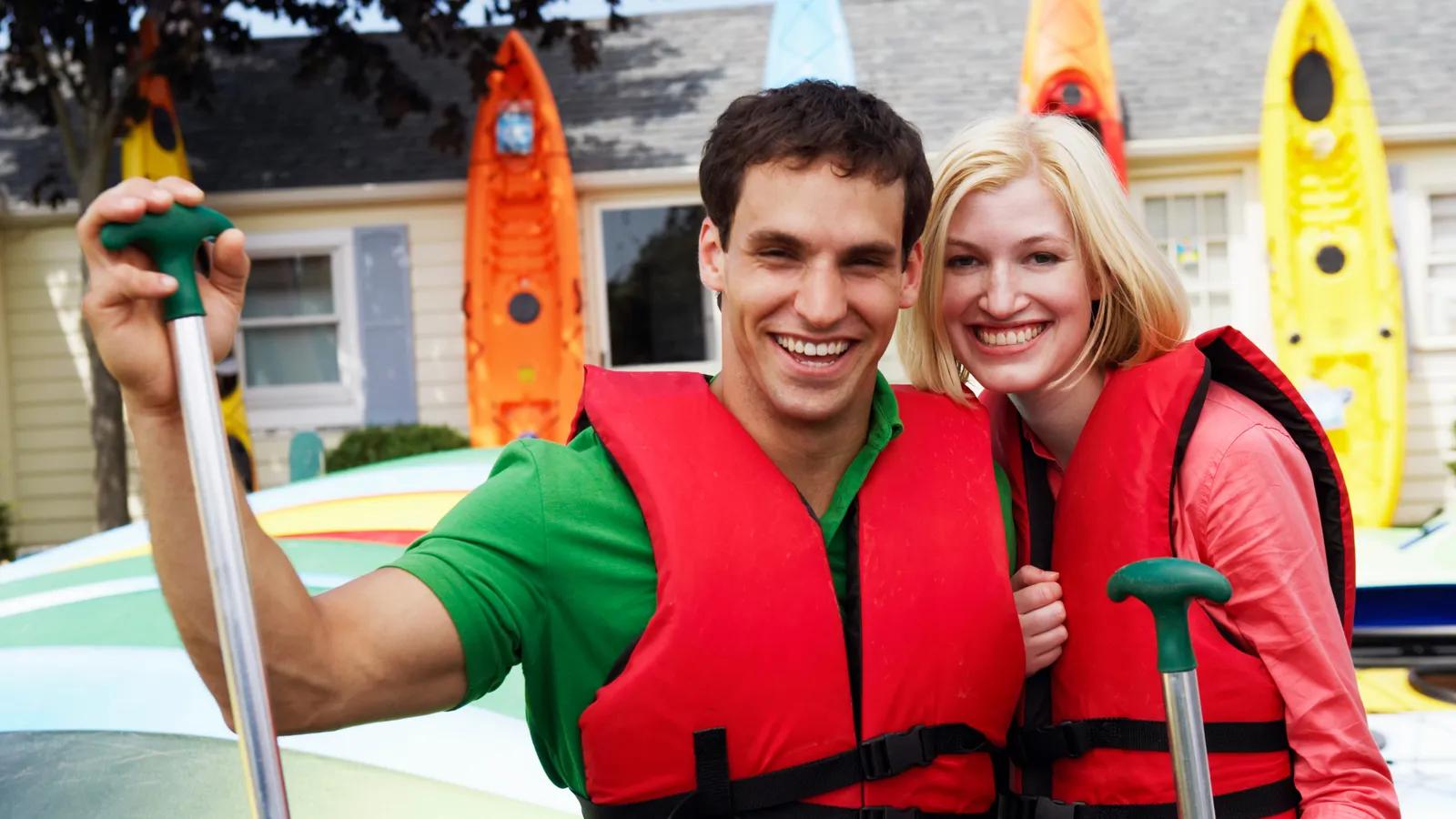
- Adults: size by chest measurement, using the size chart on the label. Brands differ, so check the specific jacket.
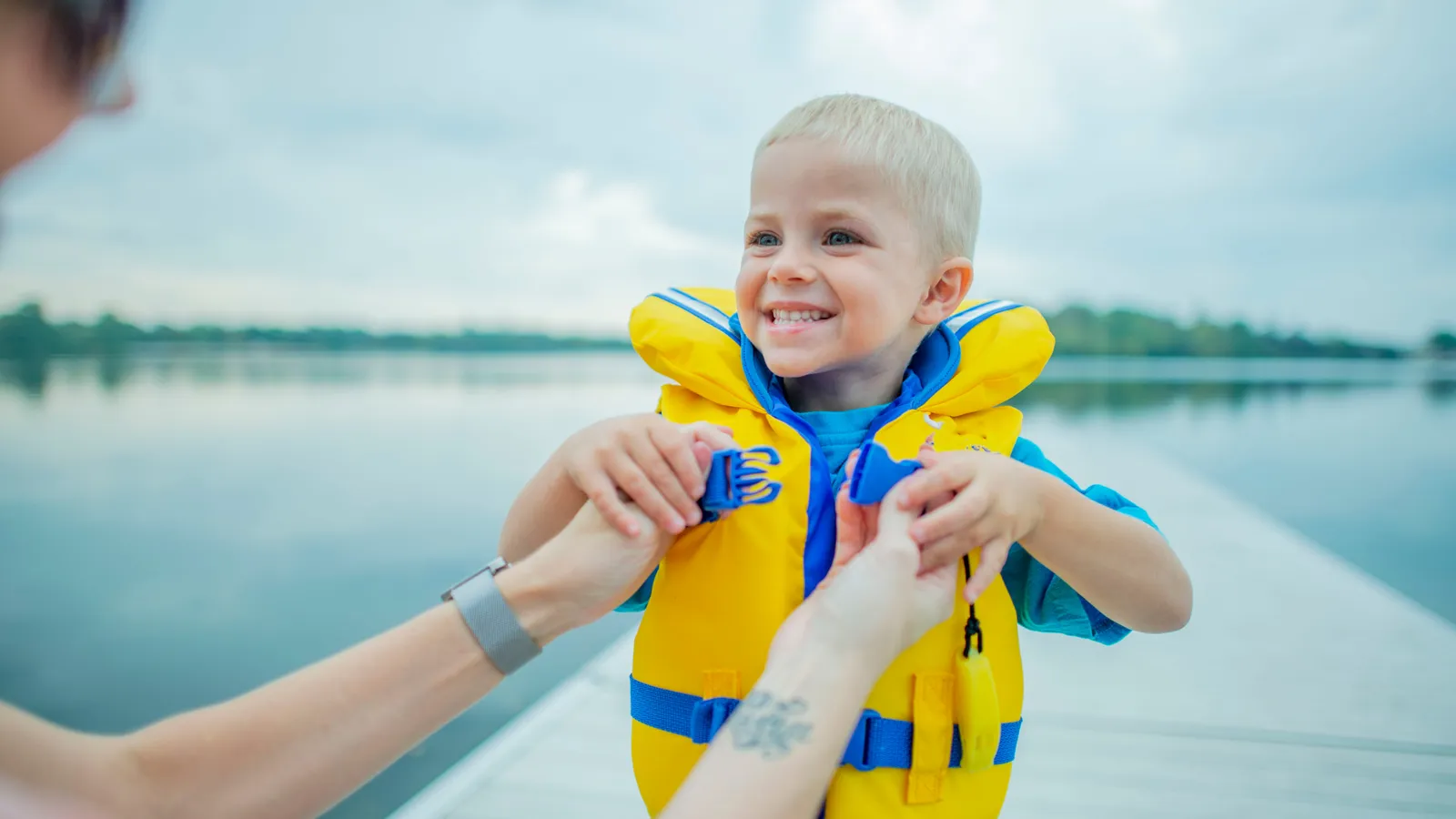
- Kids: size by weight. Common bands are infant (under about 30 lb), child (about 30–50 lb) and youth (about 50–90 lb), but follow the label.
- Fit test: fasten everything, then have someone lift the jacket by the shoulders. It shouldn’t ride up past your chin or ears.
What else to take
- A whistle. Required, cheap, and many PFDs have one attached.
- A light if there’s any chance you’ll be out after sunset. See our best paddle board lights.
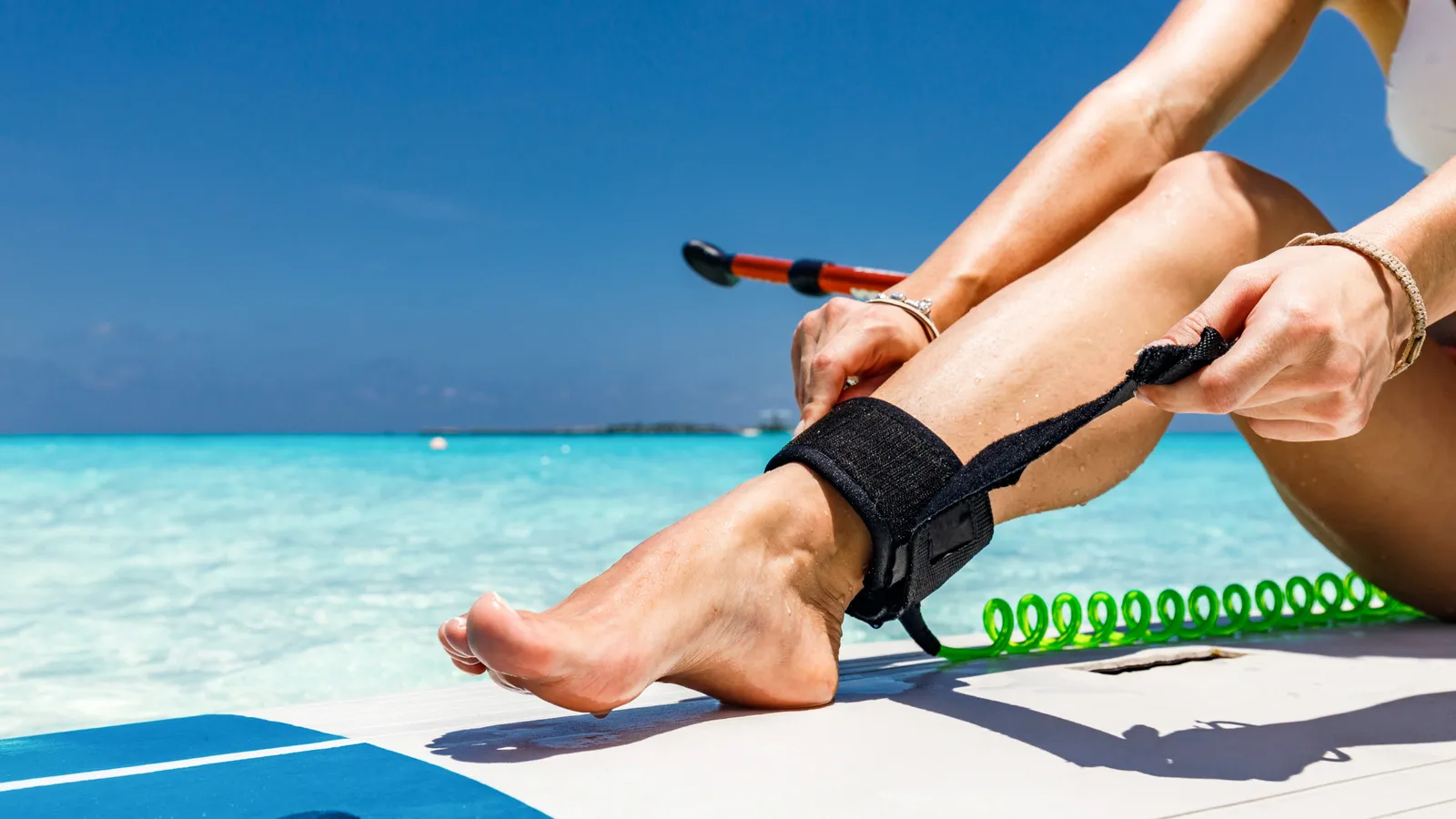
- A leash. Not required by federal law, but it keeps the board, your biggest flotation device, attached to you. On rivers, use a quick-release waist leash so it can’t snag.
- A phone in a waterproof case to call for help.
For more on when and how to wear a PFD, read should I wear a life jacket paddle boarding.
FAQ
Do adults have to wear a life jacket on a paddle board?
Under federal rules, adults 13 and older must have one on board but don’t have to wear it. Some states and local parks require it, and we recommend wearing it every time.
Do I need a life jacket if I’m paddle boarding near the beach?
Not inside a designated swimming, surfing or bathing area, where the board isn’t treated as a vessel. As soon as you paddle beyond those limits, the rules apply.
Does a belt pack PFD count?
Yes, if it’s Coast Guard-approved and you’re wearing it. A belt pack lying on the deck doesn’t count, and most are approved only for people 16 and older.
What’s the best type of life jacket for paddle boarding?
A Level 70 (or older Type III) paddling vest suits most people. Confident adult swimmers often prefer an inflatable belt pack for comfort. Kids and non-swimmers should wear a foam vest.