To paddle board with a dog, get a wide, stable board with a full deck pad, put your dog in a life jacket with a grab handle, and teach them to sit or lie in the middle of the board on dry land before you ever go on the water. Then start with short, calm trips, kneeling at first, and build up from there.
Quick answer
- Board: wide (32 inches or more), with a big grippy deck pad and enough weight capacity for you plus your dog.
- Gear: a dog life jacket with a top handle, a life jacket for you, fresh water, treats.
- Training: board on land first, then ankle-deep water, then short paddles while you kneel.
- Position: dog in the middle of the board, just in front of your feet, ideally lying down.
- Safety: never tie your dog to the board, watch for heat, and avoid water with algae blooms.
Choose the right paddle board
The board makes or breaks the experience. A dog moves around, so you want something that doesn’t flinch when they shift their weight.
Width and size
iROCKER suggests a board 32 inches or wider so it doesn’t tip when your dog moves. Longer, wider all-around boards are more stable than narrow touring or surf boards.
Check the weight capacity too. Add your weight, your dog’s weight and your gear, and make sure you’re comfortably under the limit. Our Board Fitter works out a board size for your weight. Enter your weight plus your dog’s to see what size suits the pair of you.
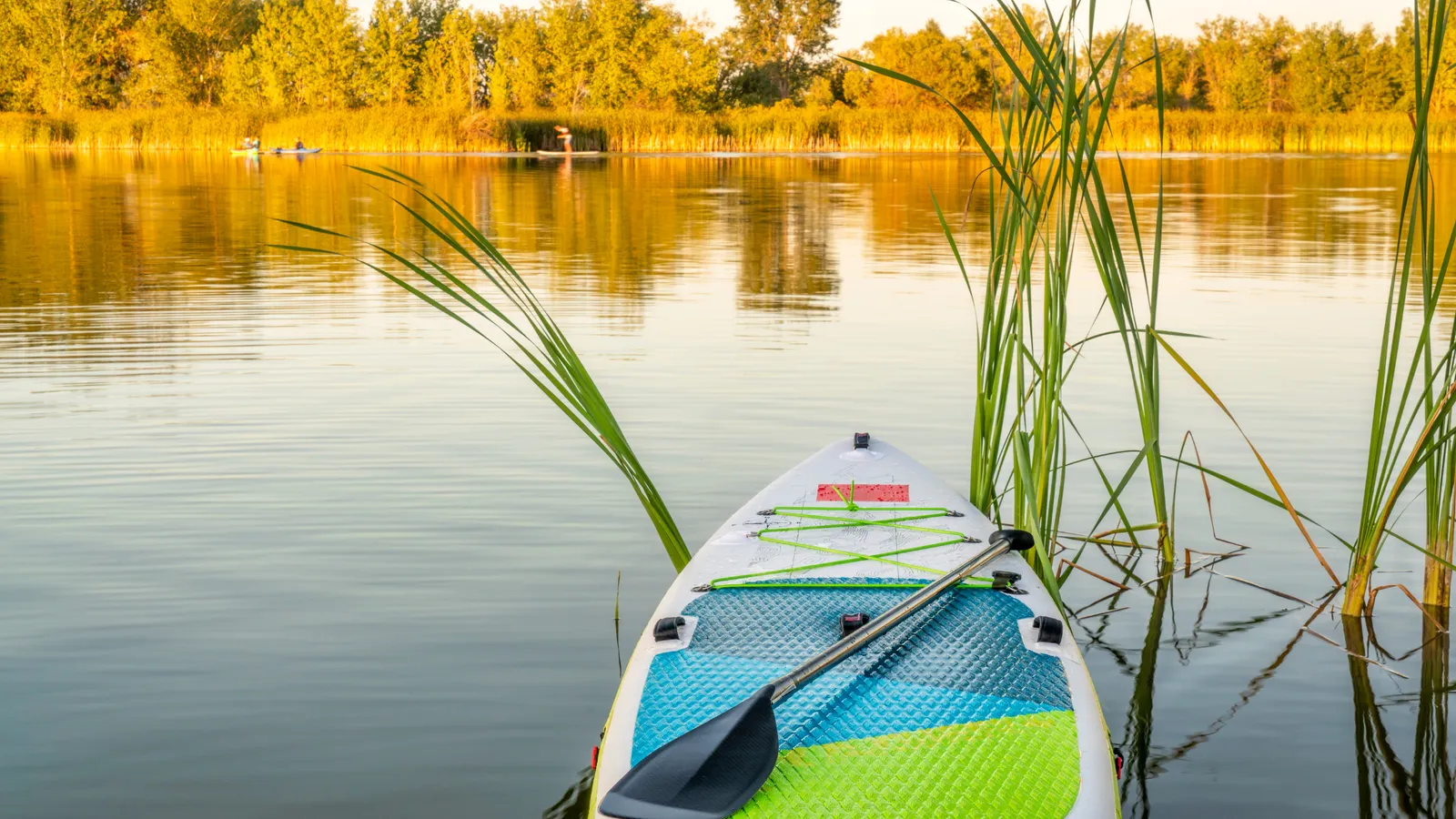
Inflatable or hard board?
Both work, and plenty of people paddle with dogs on each.
- Inflatable boards have a soft deck that’s comfortable for paws and won’t hurt your dog if they slip. Good-quality drop-stitch inflatables are tough enough to handle claws, though a cheap board with thin material is more at risk. They’re also lighter to carry, which helps when you’re managing a dog as well.
- Hard boards are stiffer and glide better, but claws can scratch the deck and finish, and the hard rails are less forgiving if your dog falls against them.
Whichever you pick, trim your dog’s nails before you go.
Deck pad
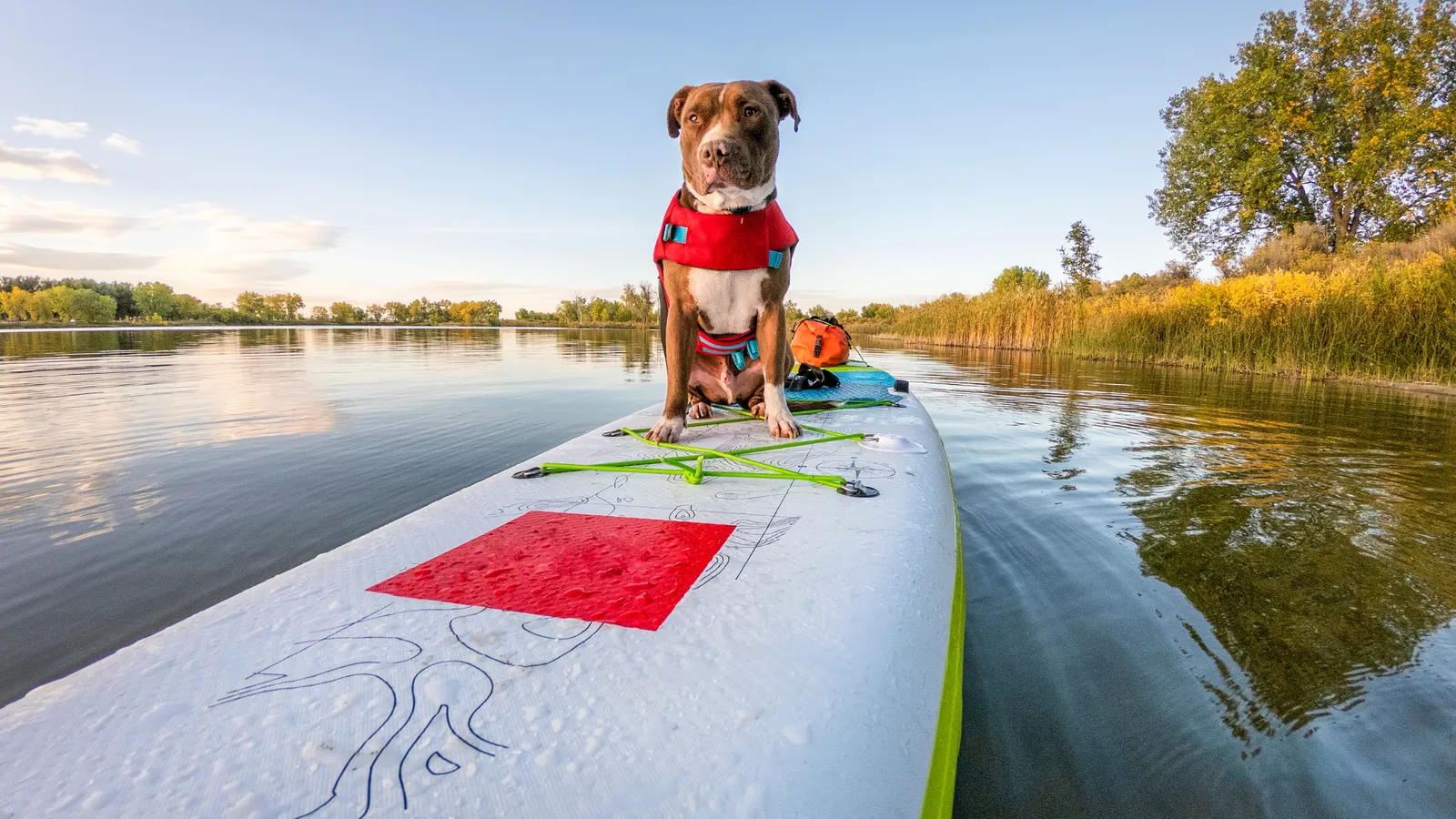
Your dog needs grip. Many boards only have a deck pad where you stand, leaving the front slippery. Look for a board with a long or full-length pad. If yours doesn’t have one, a stick-on traction pad or a non-slip mat strapped under the front bungees gives your dog a place to settle.
Gear for your dog
A dog life jacket with a handle
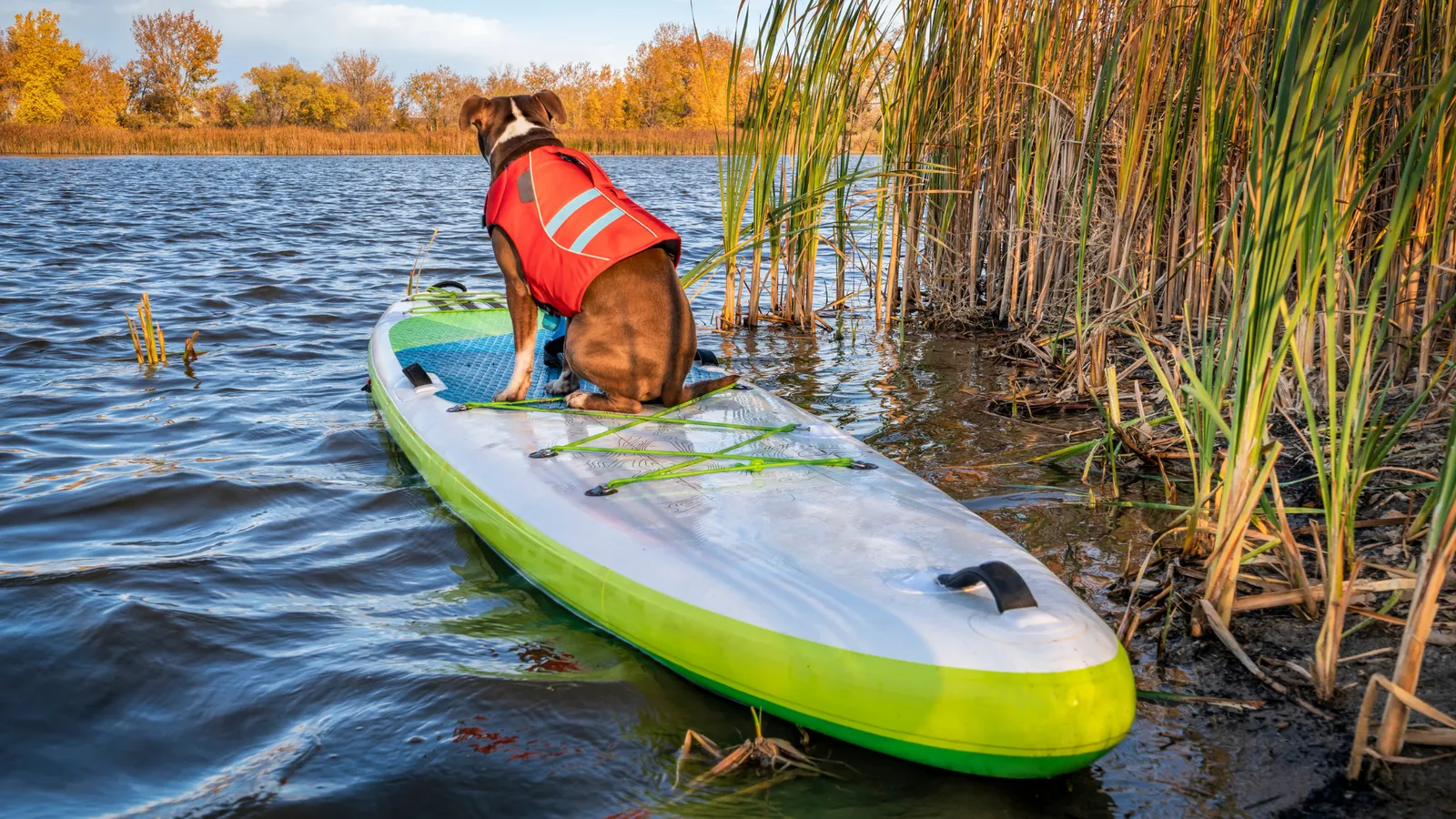
Even strong swimmers should wear one. Your dog might jump in after a duck, fall off when you turn, or end up far from shore when you both go in. A good dog life jacket keeps them floating high and has a sturdy handle on the back, so you can lift them straight up onto the board.
Check the fit: it should be snug, with no slipping forward over the head when you lift by the handle. Let your dog wear it around the house a few times before the first paddle.
A life jacket for you
If you go in together, you need to be able to help your dog without struggling yourself. See our best PFD for SUP roundup.
Leash and treats
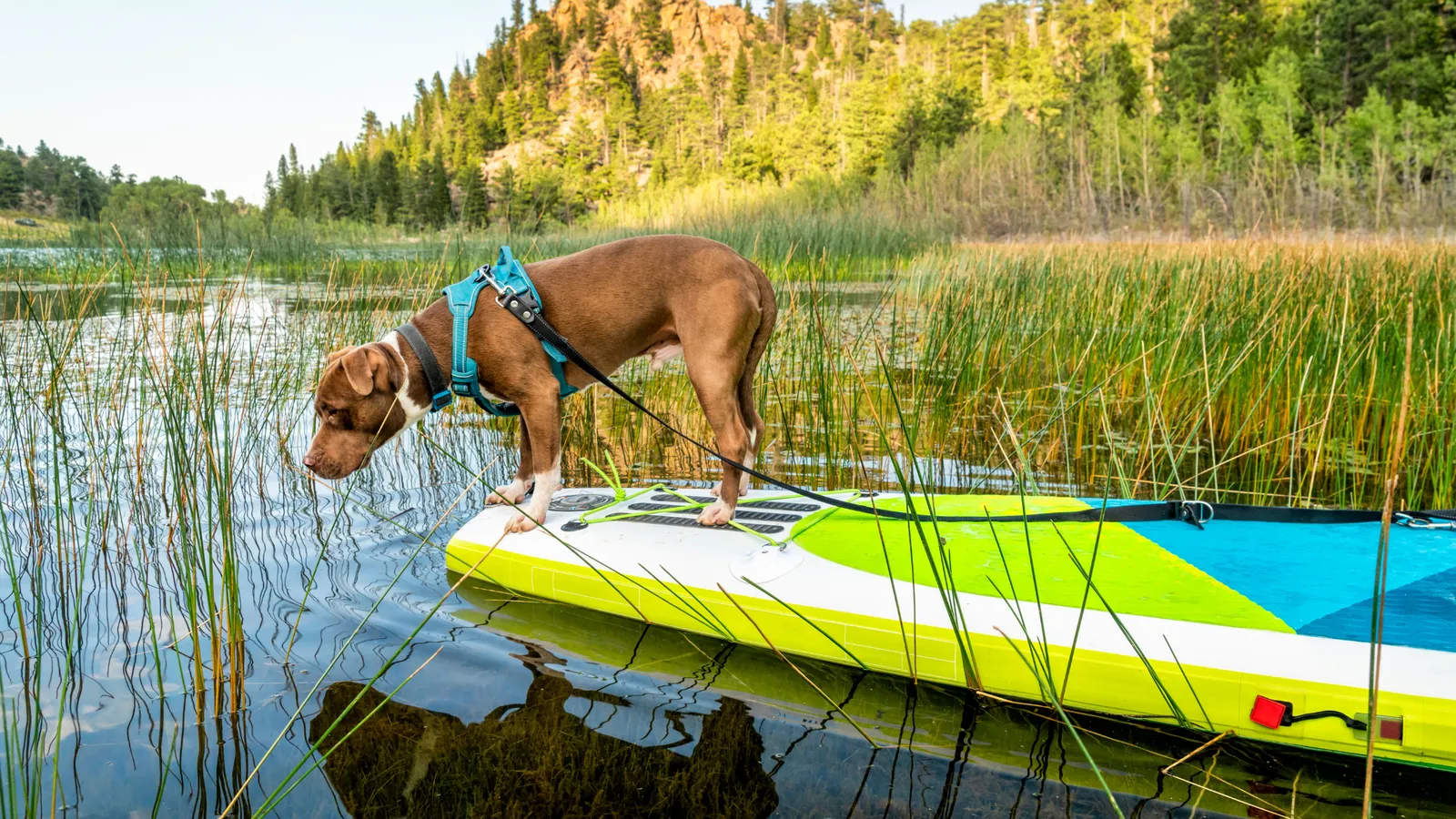
A leash is handy on shore and while you load the board. On the water, never tie or clip your dog to the board or to your paddle leash. If the board flips or your dog jumps, they could be dragged or trapped. iROCKER recommends keeping any dog leash attached to the dog only, with a quick-release.
Bring treats that won’t go mushy when wet, plus fresh drinking water and a bowl.
Train your dog before the first paddle
Most dogs need a few short sessions before they’re relaxed on a board. The American Kennel Club says your dog should know the basics (sit, down, come and stay) first.
- Start on land. Put the board on grass or carpet, scatter some treats on it and let your dog explore. Reward them for stepping on, sitting and lying down on the deck.
- Practice your commands on the board. Get your dog to hold a sit or down in the spot you want them, while you kneel and then stand behind them.
- Add the life jacket. Repeat the board sessions with it on.
- Move to ankle-deep water. Hold the board still while your dog climbs on and settles. Then push it gently along.
- Paddle on your knees in calm water for five to ten minutes, close to shore.
- Stand up once your dog is calm, and slowly make trips longer.
The AKC also notes that many trainers prefer to wait until a dog is at least 18–24 months old, though a young dog with solid recall can start earlier.
How to paddle with your dog
Launch from shallow water
Float the board in water about knee deep. Ask your dog to get on and settle in their spot, then climb on yourself, starting on your knees. If you’re new to launching, see how to launch a paddle board properly.
Keep your dog in the middle
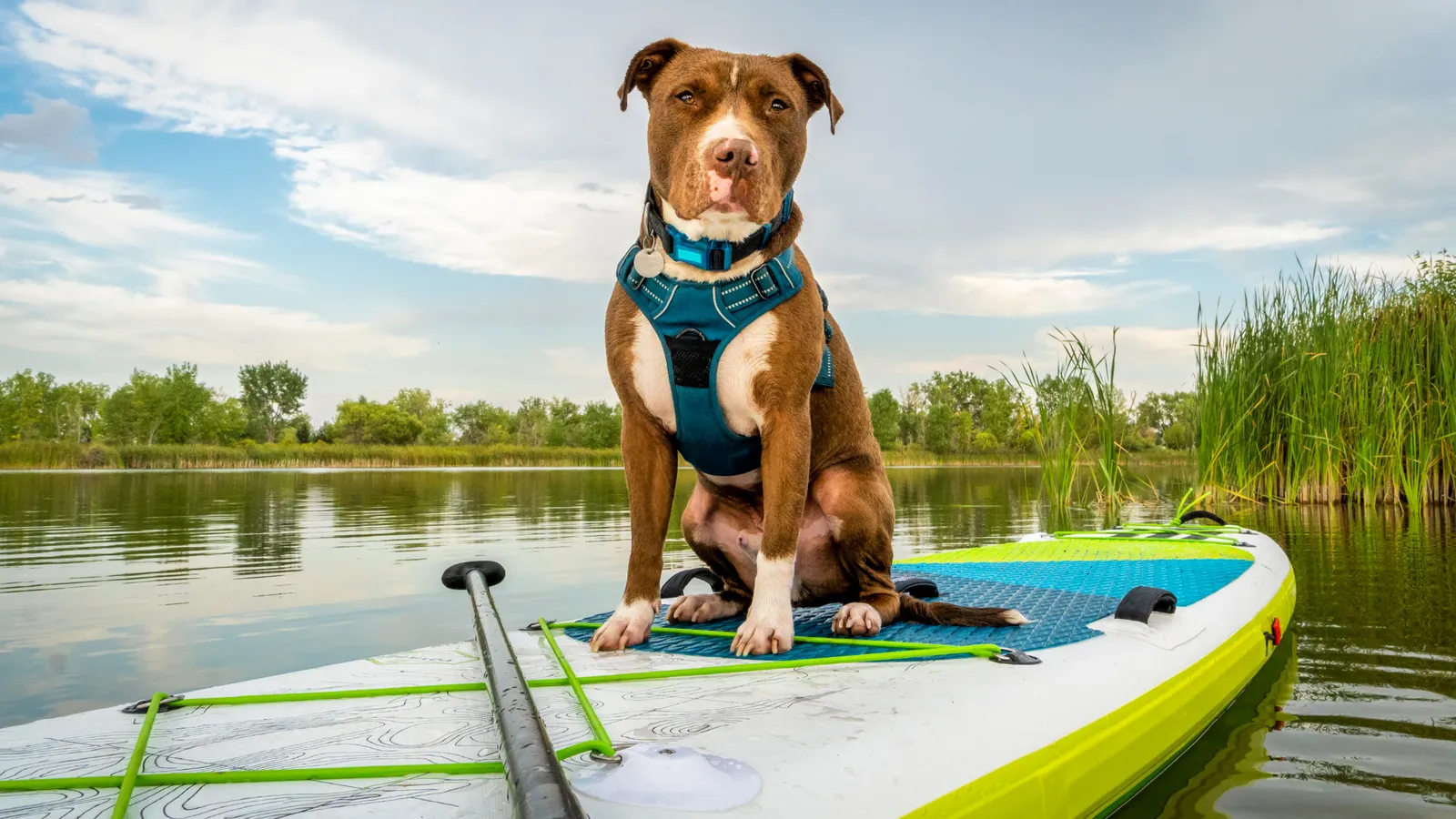
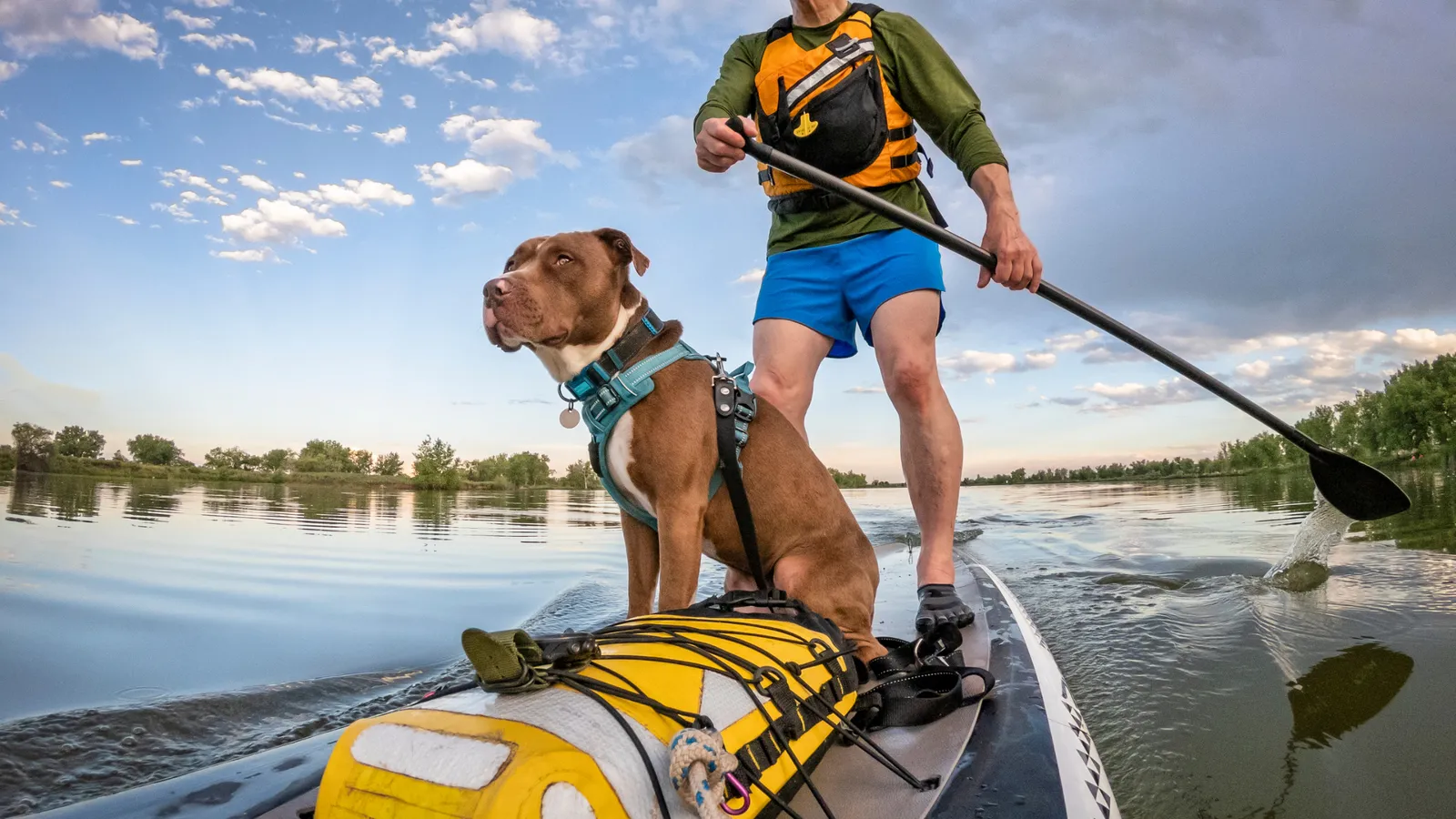
The most stable spot is in the middle of the board, just in front of your feet. Lying down is better than standing because it keeps their weight low. A small dog can sit a little further forward, but a big dog up at the nose makes the board hard to steer and more likely to tip.
Keep trips short at first
Ten to fifteen minutes is enough for the first few outings. End on a good note, before your dog gets bored, tired or hot.
Watch your surroundings
Look out for boats, other paddlers and wildlife your dog might chase. Calm, quiet water is best while you’re both learning.
Getting your dog back on the board
Your dog will go in at some point, so practice this in shallow water first.
- Kneel in the middle of the board.
- Paddle or pull your dog alongside, near the middle.
- Grab the life jacket handle (never the collar) and lift them straight up onto the deck.
- Settle them in their spot and reward them.
With a large dog, it’s often easier to slide into the water yourself, help your dog on from beside the board, then climb on behind them.
Heat, water and other hazards
- Heat. There’s no shade on the water. Watch for heavy panting, a racing heart and drooling, all signs of overheating according to the AKC. Paddle in the cooler parts of the day and wet your dog down to cool them.
- Drinking water. Bring fresh water so they don’t drink salt water or lake water.
- Sunburn. Light-colored noses and thin-coated dogs can burn. Use a dog-safe sunscreen.
- Algae blooms. Some blue-green algae are toxic to dogs. Check local advisories before you go, and skip water with scum, green or blue streaks, or dead fish. If your dog swims in or drinks water you suspect, contact a vet.
- Your own safety. Wear a life jacket and a leash. If you fall in, your board is your dog’s way home too.
FAQ
What kind of paddle board is best for a dog?
A wide, stable all-around board, 32 inches or wider, with a long deck pad and plenty of weight capacity. Inflatables are popular because the soft deck is comfortable for paws and they’re easy to carry.
Will my dog’s claws pop an inflatable paddle board?
Good-quality drop-stitch inflatables are tough enough for normal claw contact. Trim your dog’s nails and use a deck pad. Cheaper boards with thinner material are more at risk.
How big a dog can go on a paddle board?
There’s no fixed limit. It depends on the board’s weight capacity and stability. Add your weight and your dog’s, stay well under the capacity, and choose a wider board for large breeds.