Paddle board yoga, or SUP yoga, is yoga practiced on a stand-up paddle board floating on calm water. The board is usually anchored or tied to a line so it doesn’t drift, and the class or session runs much like a regular yoga flow, just with a wobbly mat and the chance of a swim.
Because the board moves under you, even simple poses ask more of your balance and core. It’s also very relaxing: being on the water, with the sky overhead, is a big part of the appeal.
Quick answer
- What it is: yoga on a paddle board, on flat water, usually anchored.
- Who it’s for: anyone who can swim and is comfortable falling in. You don’t need to be good at yoga or paddling.
- Benefits: balance, core strength, focus, and time outdoors.
- Board: wide and stable, about 10′–11′ long and 33″ or wider, with a full-length deck pad.
- Start with: a class, in warm, calm water.
What a SUP yoga class is like
Most classes start on the beach with a short paddling lesson. Then you paddle out to a sheltered spot, the instructor helps you anchor, and the class begins. Paddling Magazine and board makers describe a few common features:
- Calm, sheltered water, often a cove, lake or pond.
- Anchored boards, so you’re not drifting into each other.
- A slower pace than a studio class, with more time in each pose.
- Small groups, so the instructor can help everyone.
Expect to fall in at least once. It’s part of the fun, and the water is the softest landing you’ll get.
Benefits of paddle board yoga
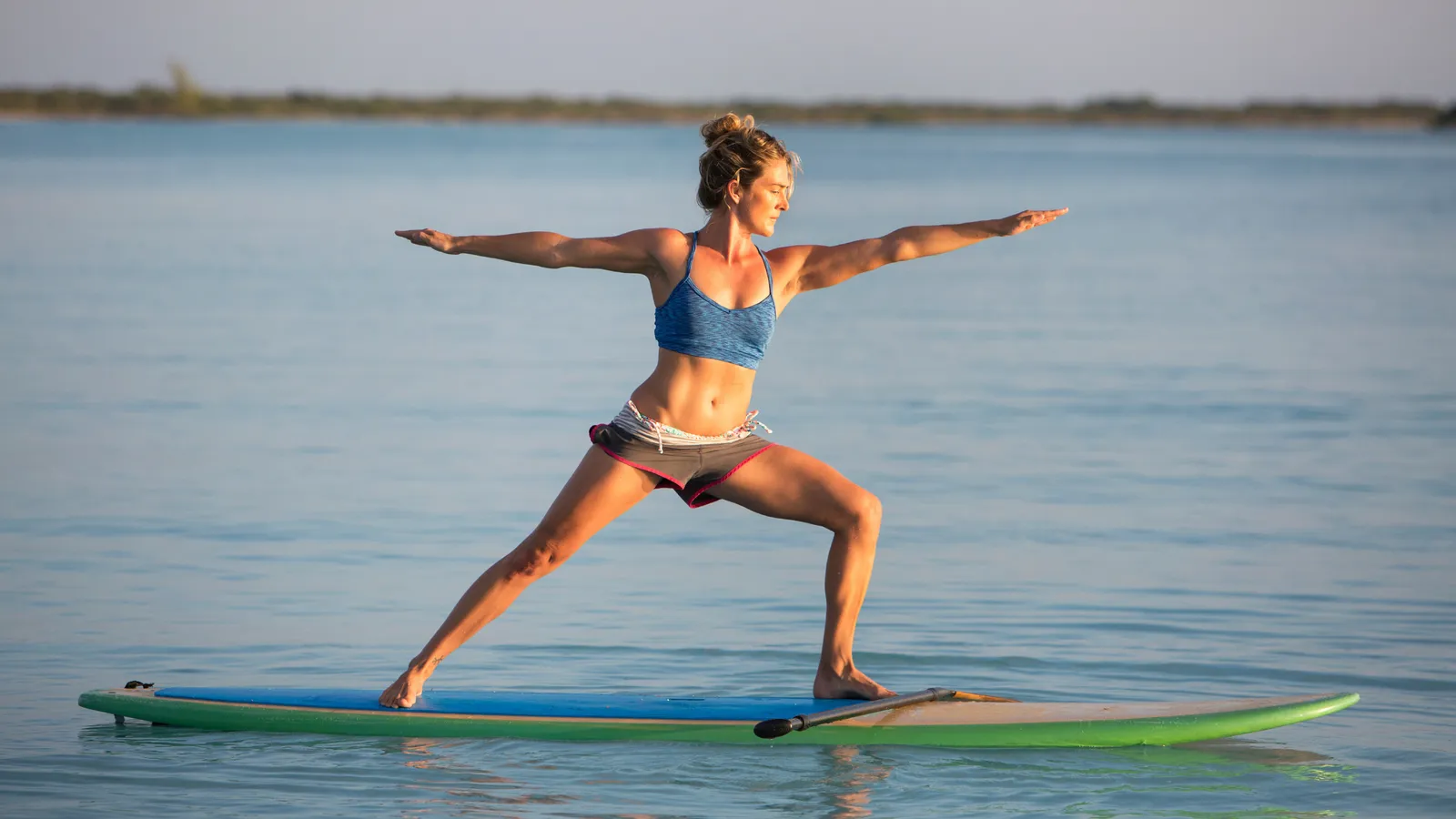
Balance and stability
The board’s constant small movements make your body keep adjusting. Your feet, ankles and legs learn to make small corrections, which carries over to paddling and land yoga.
Core strength
Holding poses on an unstable surface puts your core to work. Research on regular paddle boarding found the core muscles work hard enough to build strength, and yoga adds held poses on top of that. See what muscles paddle boarding works.
Focus
You can’t think about much else when you’re balancing in a lunge on the water. Many people find that makes it calming, once they get past the first wobbles.
Time outdoors
Fresh air, sunlight and water instead of a studio. For a lot of people, that’s the main reason to try it.
Beginner SUP yoga tips
- Stay near the handle. The carry handle in the middle of the board is the most stable spot. Keep your hips or hands near it.
- Start low. Seated, kneeling and tabletop poses first. Stand once you’re comfortable.
- Move slowly. Shift your weight gradually between poses.
- Use a wider stance than on land.
- Look at a fixed point on the horizon, not at the water.
- Fall away from the board, not onto it.
Paddle board yoga poses
Beginner poses
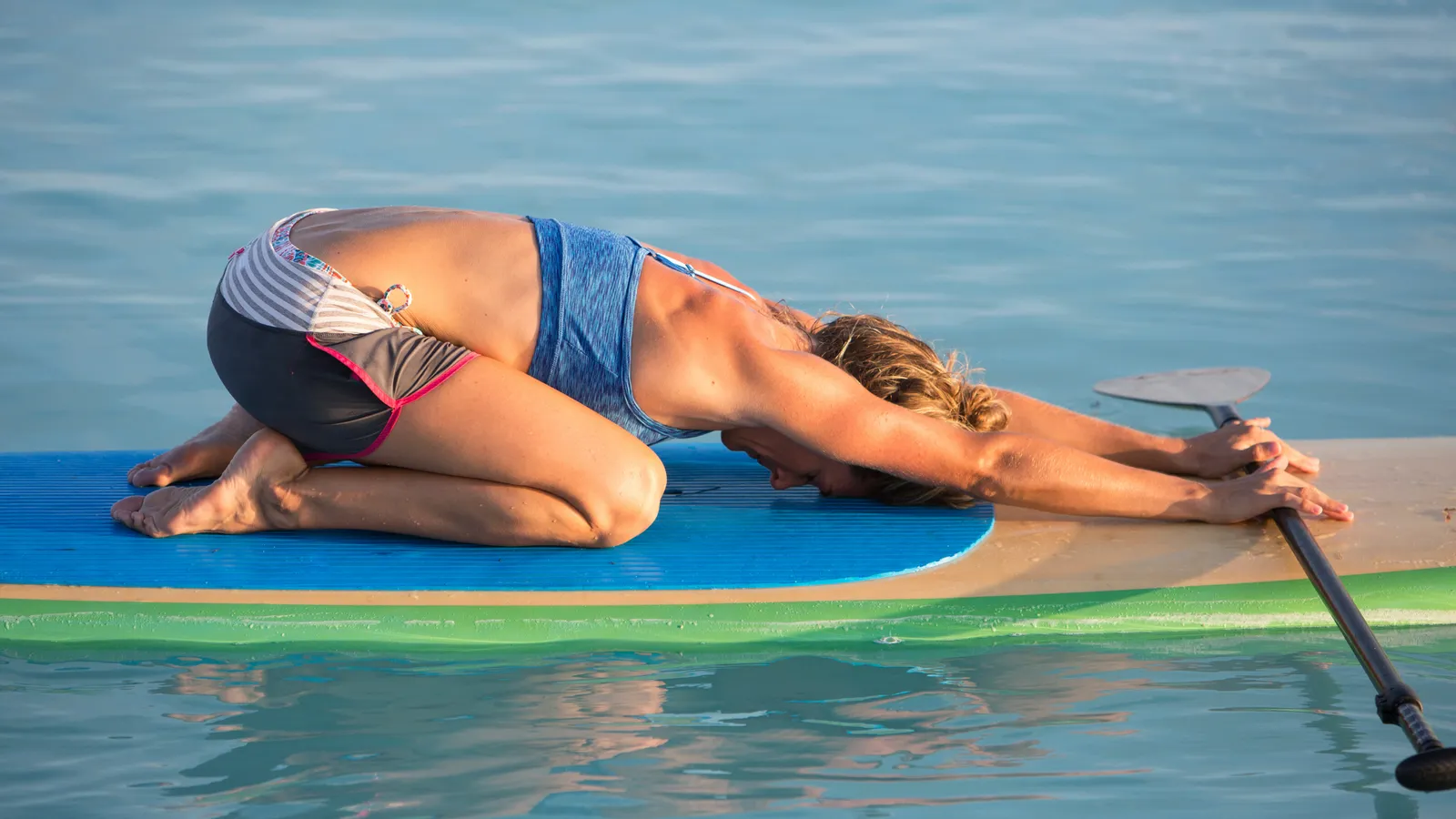
These are close to the board and easy to balance in. Yoga Journal has a good illustrated list of SUP yoga poses for beginners.
- Easy seated pose (cross-legged)
- Cat and cow, from tabletop
- Child’s pose, your resting pose whenever you need a break
- Low lunge, with your back knee down
- Upward-facing dog or a low cobra
Intermediate poses
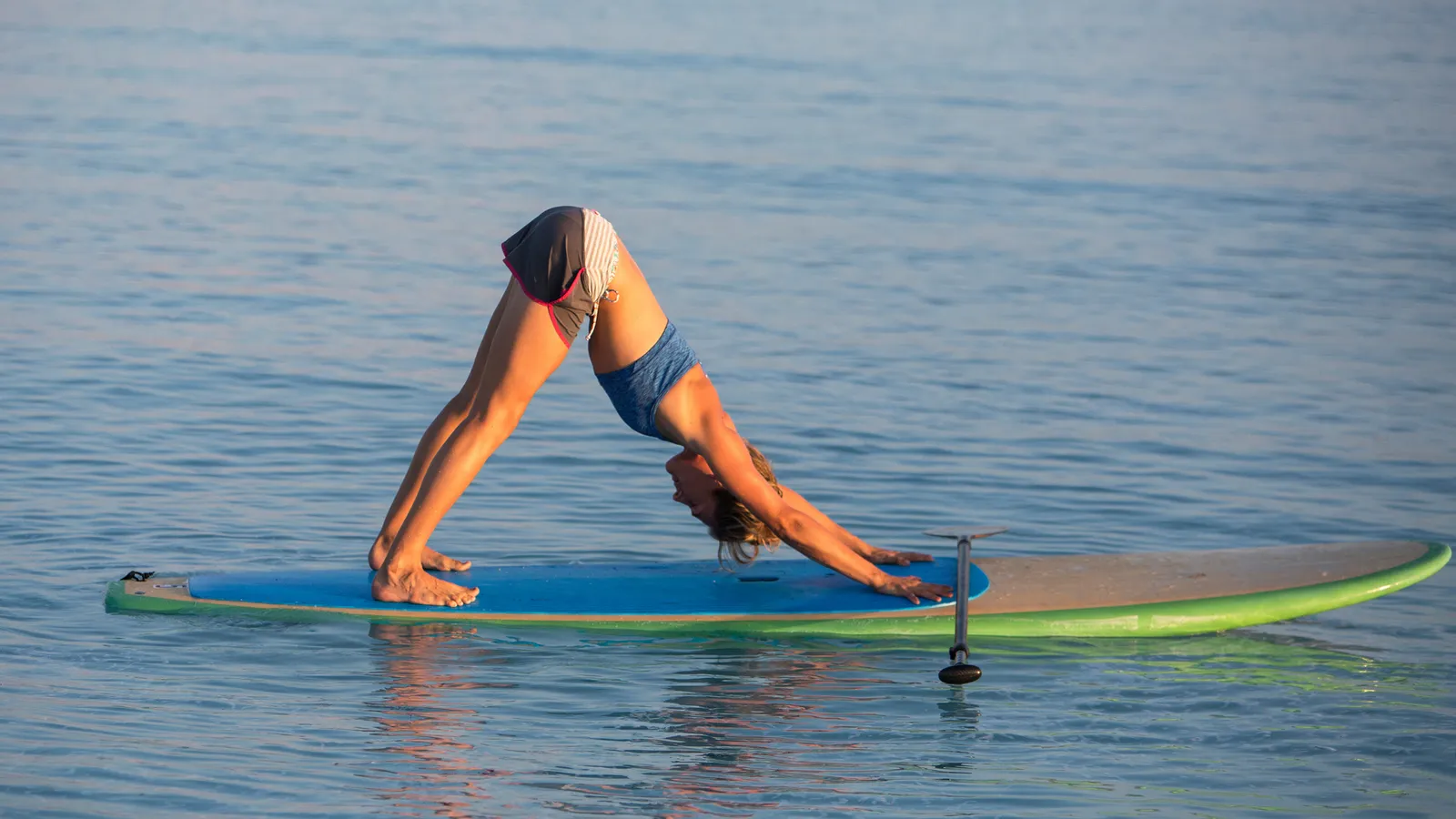
Once you’re comfortable, try standing poses. Keep your feet wide and centered over the handle.
- Downward dog
- Mountain pose
- Crescent lunge
- Pigeon
- Bridge
Advanced poses
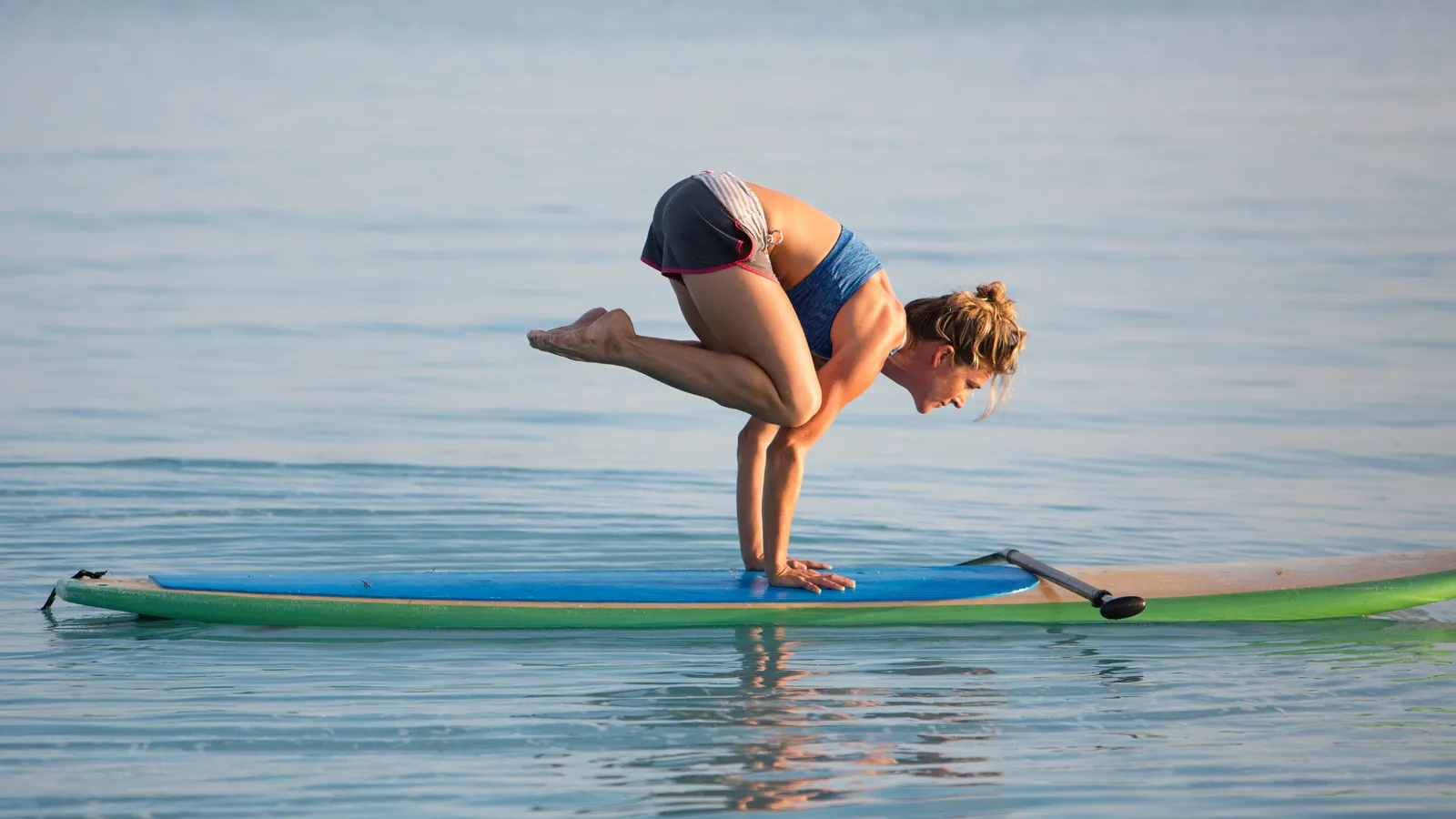
For experienced yogis on very calm water.
- Warrior 2 and side angle (across the board’s width)
- Standing forward bend
- Tree pose
- Headstand, only with plenty of land practice first
What to wear
Wear something you can get wet in and move freely in:
- Swimsuit, or yoga clothes that dry quickly
- A rash guard for sun protection
- A wetsuit or warmer layer if the water is cool
Bring sunscreen and a hat for the paddle out and back. Our guide on what to wear paddle boarding has more ideas.
Safety
- Learn on calm, warm water. Wind and boat wakes make yoga hard and falls more likely. See the best conditions for paddle boarding.
- Use a leash and an anchor. An anchor stops you drifting; a leash keeps the board close if you fall. Set the anchor clear of obstacles and in water deep enough to fall into safely.
- Bring a life jacket. On most US waters a paddle board counts as a vessel outside swim areas, so the Coast Guard requires a life jacket on board. Many people take it off during class and keep it strapped under the bungees. Weak swimmers should keep it on.
Best paddle boards for SUP yoga
A good yoga board is wide, stable and has a deck pad that covers most of the board, so your hands and knees aren’t on bare PVC or epoxy.
- Length: about 10′–11′.
- Width: 33″ or wider, so you have room for wide stances and poses across the board.
- Thickness: about 6″ for an inflatable.
- Extras: an anchor point or D-rings at the front and back, and a full-length deck pad.
Inflatables are the most popular choice: they’re softer on knees and easy to store. Our Board Fitter has a yoga setting that sizes a board to your weight, and our roundup of the best paddle boards for yoga has picks recommended by independent testers.
FAQ
Is SUP yoga hard for beginners?
It’s harder than studio yoga, but beginners do it all the time. Start with a class, keep to simple poses, and expect to fall in now and then.
Do I need to know how to paddle board first?
No. Most classes teach you the basics first, and you’ll mostly be anchored. Being comfortable in the water matters more.
Can you do SUP yoga on any paddle board?
You can try, but narrow or touring boards make it much harder. A wide all-round or yoga board is best.
How long is a SUP yoga class?
Usually about an hour to an hour and a quarter, including paddling out and back.